







Protecting drinking water sources has become more complex as utilities face increasing pressure from nutrient loading, warmer temperatures, and more frequent extreme weather events. One of the most persistent challenges is the rise of harmful algal blooms (HABs)—events that can threaten public health, disrupt treatment operations, and drive up costs if not detected early.
Effective water quality monitoring is no longer just about measuring bulk indicators like turbidity or chlorophyll. Utilities need tools that provide insight into which organisms are present, how quickly populations are changing, and when intervention is most effective. Early, organism-level information is often the difference between targeted, cost-effective treatment and reactive crisis management.
Download Guide | FlowCam for HAB Management in Drinking Water Utilities
Why Harmful Algal Blooms Are So Difficult to Manage
HABs can develop rapidly, sometimes within days, and may involve a combination of cyanobacteria, green algae, diatoms, and other phytoplankton. While not all algae are harmful, certain cyanobacteria can produce cyanotoxins or taste-and-odor compounds such as geosmin and MIB, which can trigger customer complaints even when the water remains safe.
Traditional monitoring methods—such as manual microscopy do not allow for large-scale, frequent sampling and often struggle to keep pace with these rapid shifts. Limited sampling and labor-intensive analysis can leave utilities blind to early warning signs, allowing blooms to grow unchecked until treatment options become more expensive and disruptive.
Moving Beyond Reactive Monitoring
Modern water quality programs increasingly emphasize proactive monitoring strategies that combine field sensors with laboratory-based analytical tools. While in-situ probes are valuable for tracking trends, they don’t reveal the underlying biological drivers behind a signal spike.
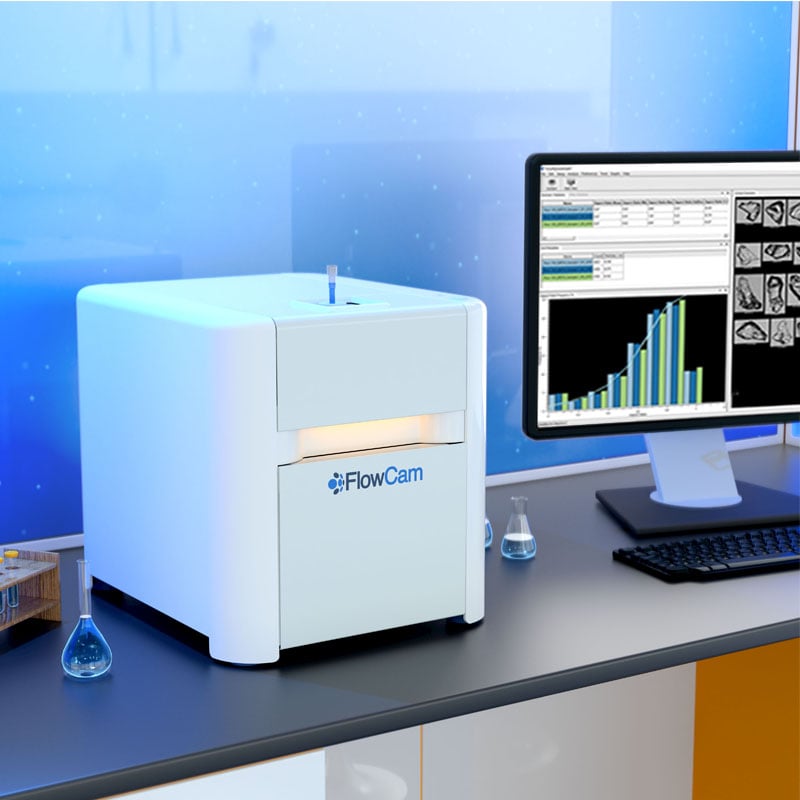
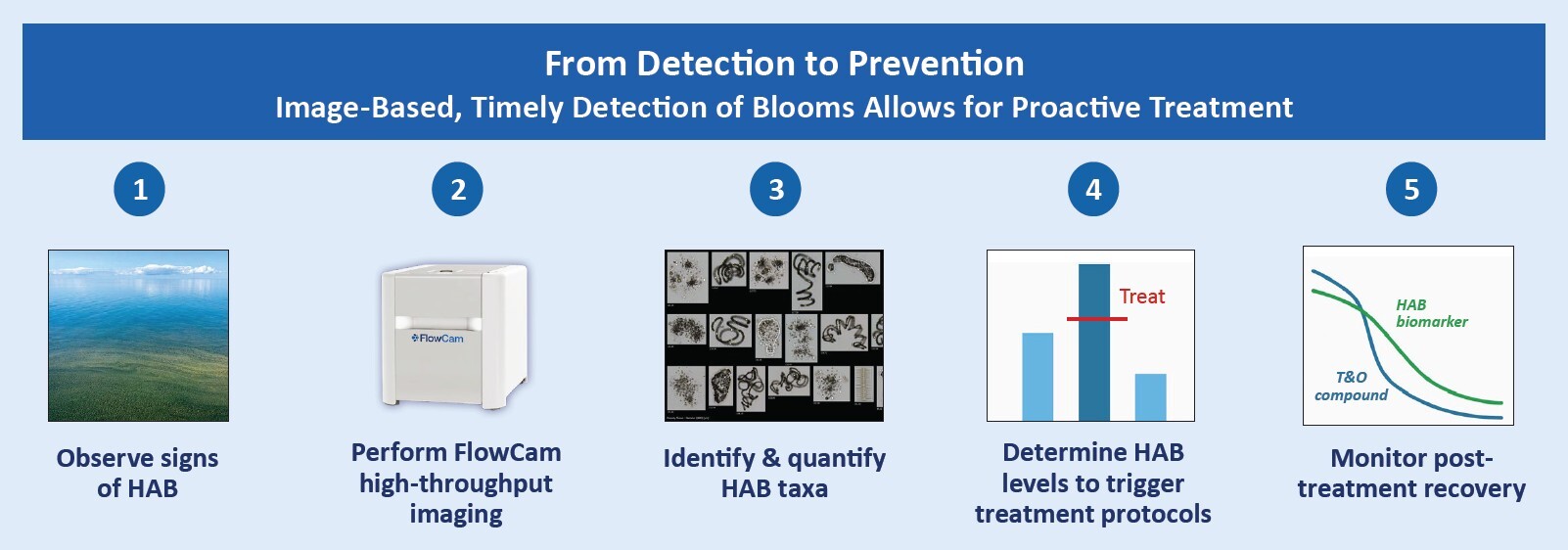
This is where flow imaging microscopy plays an important role. By automatically imaging and measuring thousands of particles per sample, flow imaging microscopy provides visual, quantitative data on algal and cyanobacterial communities. Operators can see not just that biomass is increasing, but which organisms are responsible, how large they are, and whether their abundance is trending toward operational or health risk thresholds.
Image-Based Data for Informed Decisions
High-resolution particle images paired with size, shape, and count data allow utilities to:
- Differentiate cyanobacteria from other algae and debris
- Track population shifts over time and across sampling locations
- Establish baselines and action thresholds for early intervention
- Support treatment decisions with visual, auditable evidence
Instead of reacting to customer complaints or visible surface blooms, utilities can identify developing issues earlier—when treatments are more targeted, less disruptive, and significantly less costly.
Building a Resilient Water Quality Monitoring Program
As HABs become more frequent, utilities are rethinking how they monitor source water and reservoirs. Integrating image-based tools alongside sensors, toxin testing, and molecular methods creates a more complete picture of water quality and biological risk.
 For a deeper look at how FlowCam can support proactive water quality monitoring—from early bloom detection to post-treatment verification—explore our detailed application note, "FlowCam for Harmful Algal Bloom Management in Drinking Water Utilities".
Early detection remains one of the most effective tools utilities have. With the right data at the right time, HAB management can shift from reactive response to confident, informed prevention.