
Aquatic
FlowCam for Shellfish Research & Aquaculture Monitoring
Automate and accelerate routine microscopy tasks to save time and increase throughput in shellfish research programs, hatcheries, finfish operations, and other aquaculture monitoring and research programs.
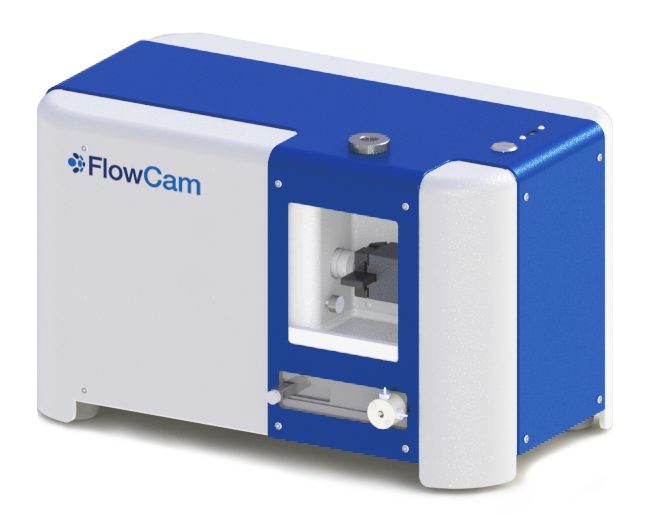
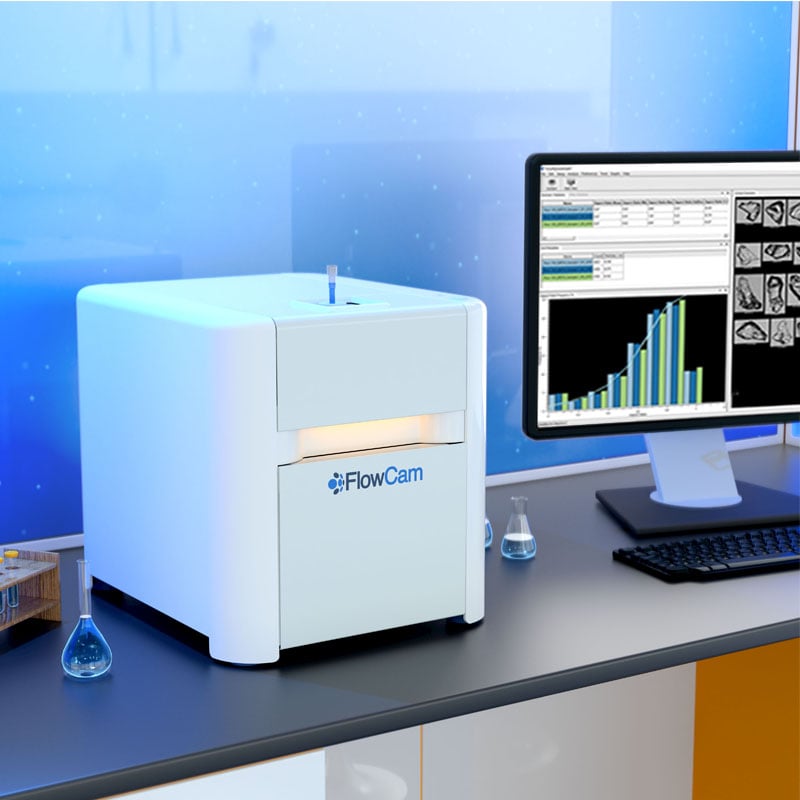
FlowCam’s all-in-one high-speed flow imaging microscope allows researchers and commercial operations to target microalgae and shellfish larvae on a single platform.
Whether you’re evaluating fertilization success rate and egg growth or generating a consistent, long-term monitoring record to track phytoplankton communities and harmful algal bloom events, FlowCam makes shellfish hatchery research and other aquaculture operations more streamlined.
High-Performance Shellfish Aquaculture Monitoring Capabilities
FlowCam is a powerful tool ideally suited to the needs of researchers and commercial operators alike, including shellfish hatcheries and finfish farms. Our FlowCam 8000 series, for example, is highly versatile and enables users to:
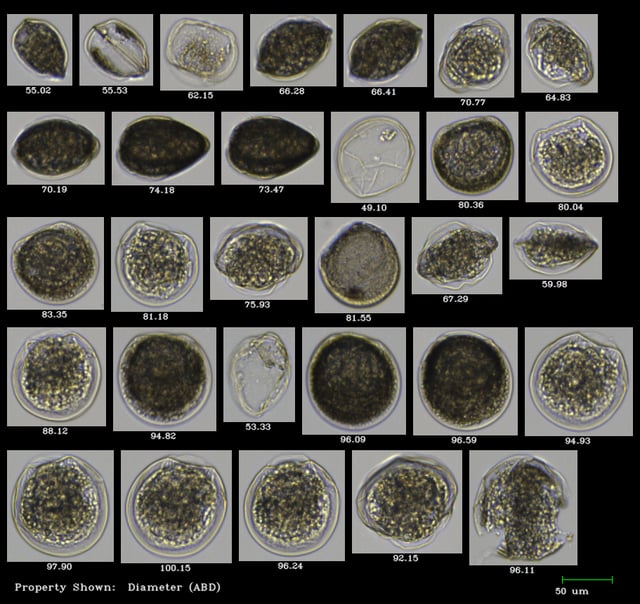
- Obtain statistically-significant count, size, and morphology data along with high-resolution images to analyze larvae, microalgae, plankton, and HABs with the same instrument.
- Quickly and reliably evaluate fertilization success rate, egg growth, development abnormalities, and contaminants.
- Rapidly count and measure larvae at several developmental stages and monitor larval transport.
- Expedite analysis of water samples to evaluate plankton availability for food supply.
- Visualize and enumerate phytoplankton to inform HAB mitigation strategies and generate long-term phytoplankton monitoring records.
Helpful Resources
"FlowCam is like a new sleuth that helps us solve mysteries in our hatchery, sometimes before we even know we have a problem!"

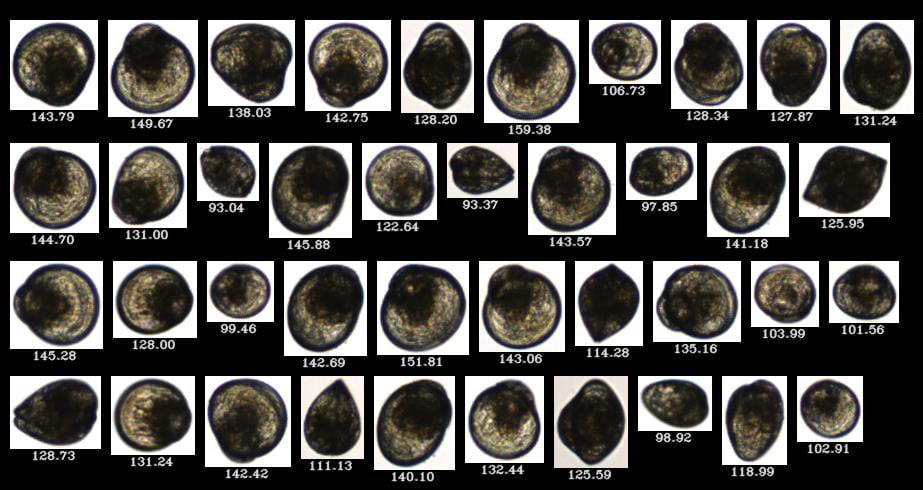
FlowCam collage of scallop spat from NOAA Milford Lab
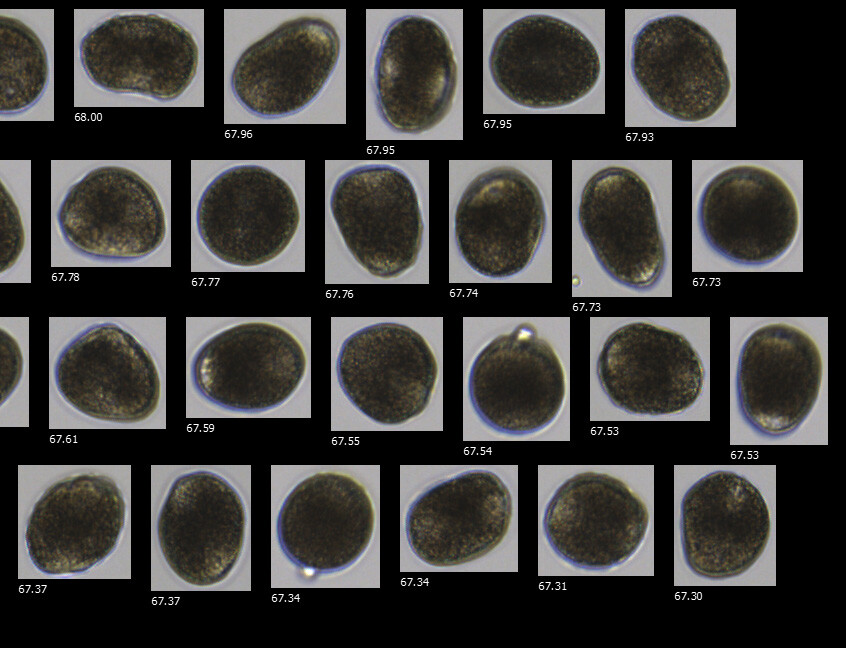
Mussel eggs with and without polar bodies imaged with FlowCam 8100 (10X, FOV100), ranging in size from 67 to 68 μm in diameter
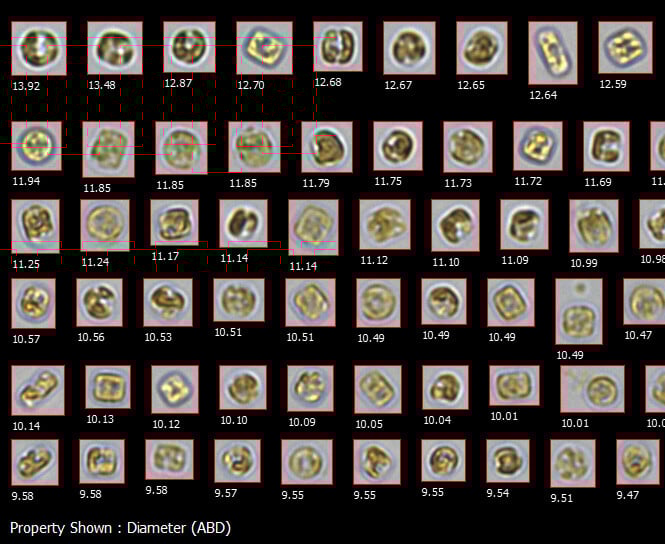
Thalassiosira weissflogii cells grown in culture by Maine's Downeast Institute shellfish hatchery, imaged by FlowCam 8100 at 20X
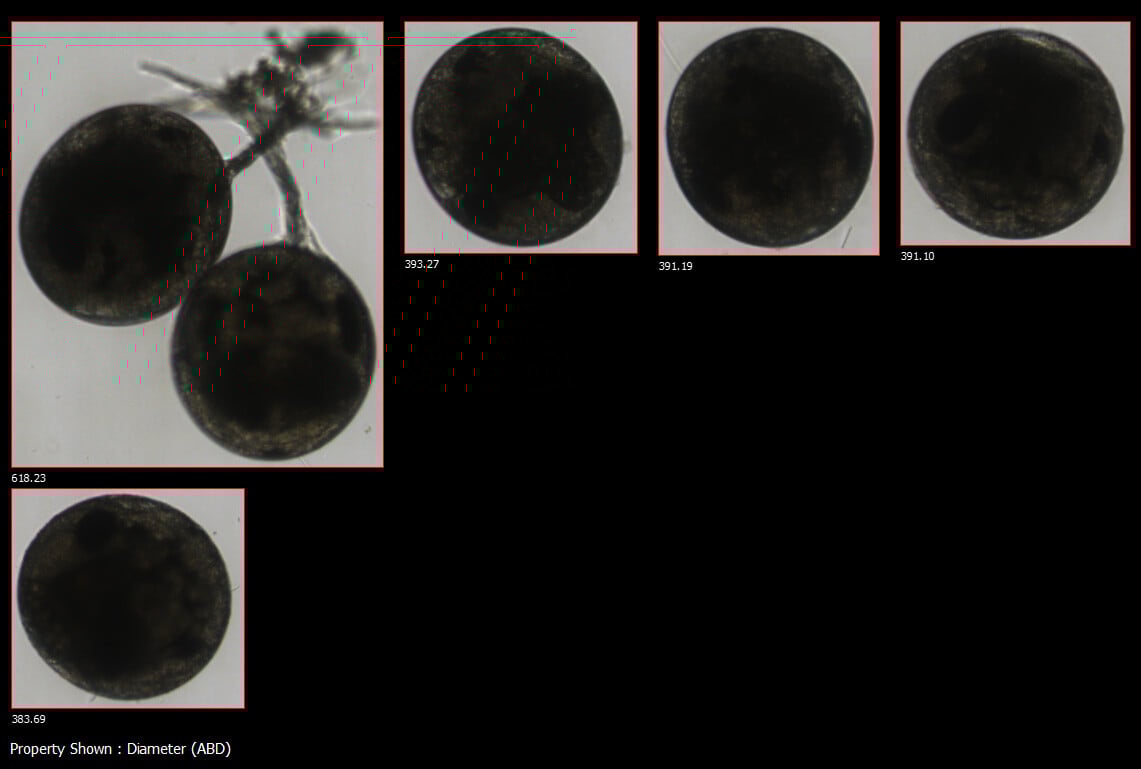
Asian shorecrab eggs imaged with FlowCam 8100 (4X, FOV600) (Source: Renee Montanaro, University of Massachusetts Dartmouth)
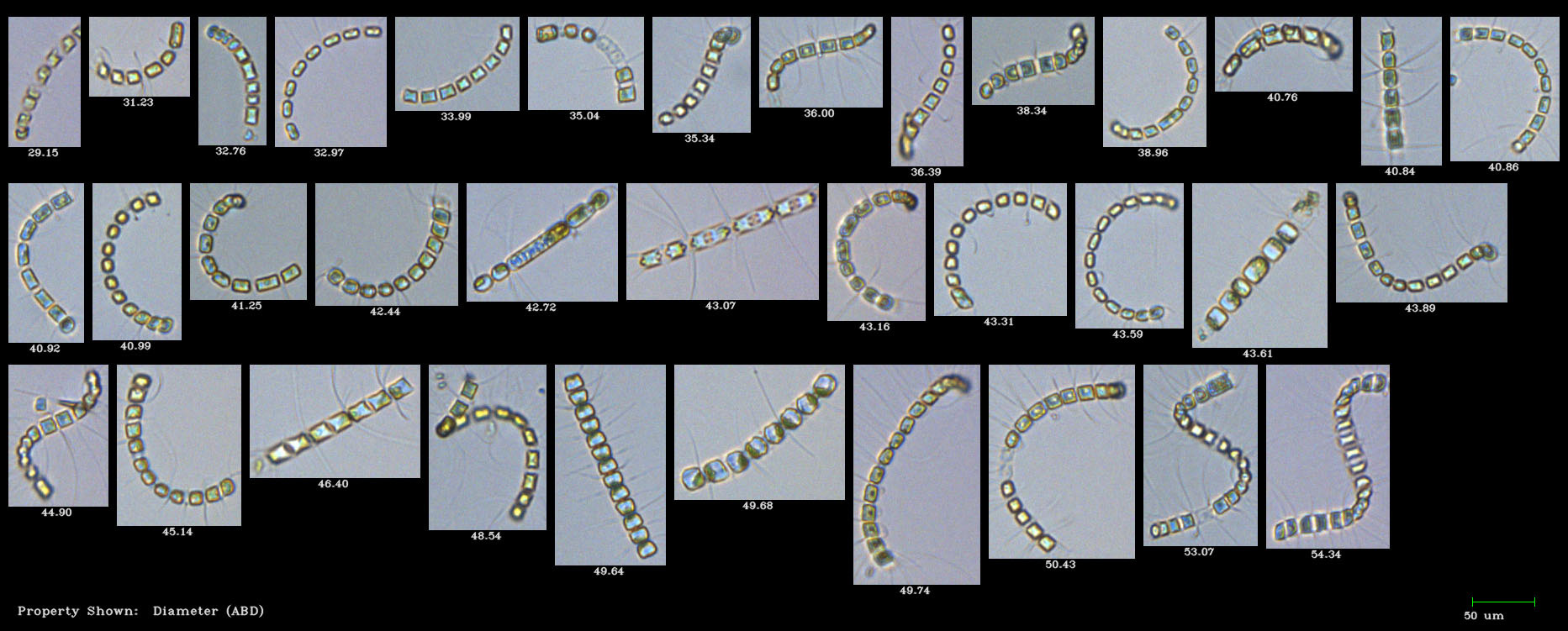
Chaetoceros, a diatom that can irritate fish gills, imaged by FlowCam at 10X
Ideal Applications for FlowCam Aquaculture Instrumentation & Software
Combining the basic principles of microscopy, particle counting, and image recognition, FlowCam enables rapid analysis and particle characterization for aquaculture applications as diverse as:
- Shellfish Reproduction
- Oyster Larvae Research
- Microalgae Culture Growth
- Water Quality Monitoring
- Harmful Algal Bloom Prevention
- and more...
Fluorescence-triggered imaging with the FlowCam 8400 further improves data quality. By using a laser trigger to capture images only when fluorescing particles pass through the flow cell, FlowCam 8400 minimizes noise from non-fluorescing materials, ensuring that irrelevant data is not collected.
Users can customize laser excitation to 488 nm, 532 nm, or 633 nm to target specific stains or pigments, such as FITC, phycoerythrin, Nile Red-stained lipids, or phycocyanin in cyanobacteria.
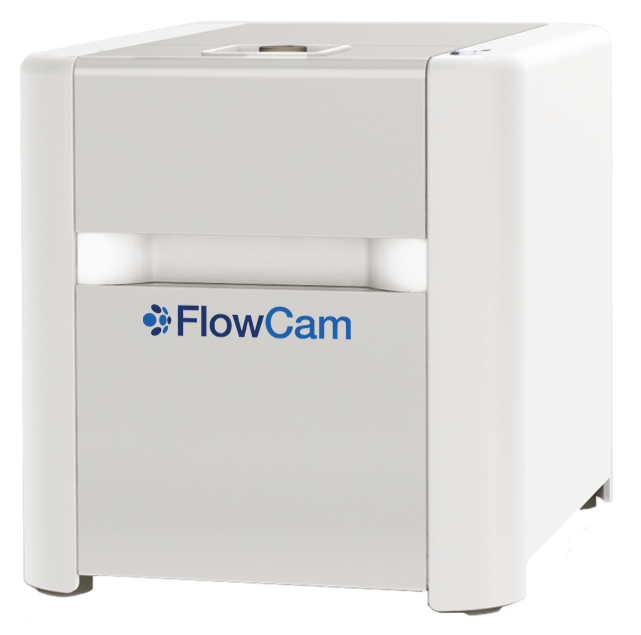
Learn More About Shellfish Research & Aquaculture Monitoring with FlowCam:
-
FlowCam is a precision flow imaging microscopy (FIM) instrument that enables rapid, high-throughput particle analysis and more comprehensive characterization of particles and organisms than other high-throughput methods. To learn more about how flow imaging microscopy works, read Using Flow Imaging Microscopy for Dynamic Particle Image Analysis: How It Works.
-
Tools like FlowCam can quickly capture and analyze thousands of particles per sample, generating reliable counts, size distributions, and morphology indicators that help assess larval growth and overall condition.
At the same time, FlowCam supports control of feed quality and strengthens the surveillance of harmful algal blooms (HABs) by pairing automated detection with stored images for verification. Because results are quantitative and reproducible, teams can detect problems early, improve decision-making (e.g., stocking density, transfer timing), and establish robust quality assurance procedures.
-
Yes. FlowCam can image, measure, and enumerate algae, shellfish larvae, and zooplankton. FlowCam allows users to target organisms of a wide range of sizes, from microalgae and ciliates to shellfish larvae and small copepods.
-
Flow imaging microscopy rapidly captures and analyzes thousands of particles per sample, producing quantitative data such as cell counts, size distributions, and morphology measurements—so you can detect changes in plankton communities faster and with greater consistency.
Just as importantly, every particle is stored as an image, creating a digital record that supports validation, QA/QC, training, and reliable reporting over time.
The result is faster screening and trend detection, plus image-backed evidence you can reference later—making your HAB monitoring more efficient, repeatable, and scalable.
-
FlowCam helps researchers studying shellfish diseases by enabling rapid detection and characterization of phytoplankton communities, including harmful algae and other undesirable organisms that can impact shellfish health. By capturing images in flow, researchers can view target taxa from multiple orientations, making it easier to identify shellfish larvae and egg malformations, algal culture infections, and different reproductive phases that are often missed on traditional microscope slides. The high-quality images and associated measurements support deeper insight into organism condition, growth, and bloom dynamics, while creating datasets that can be revisited for analysis, reporting, and training.
At the same time, FlowCam dramatically increases throughput by speeding up sample analysis and maximizing the amount of data extracted from each sample. Large sample volumes can be processed quickly, allowing researchers to increase sampling frequency and sample size while imaging, measuring, counting, and sorting taxa in a single workflow. The result is a major productivity gain for researchers and hatchery teams, enabling faster decisions and more comprehensive monitoring with far less manual effort.
-
Hatcheries that use FlowCam, like the one at the Downeast Institute, have reduced microscopy time by 70% for post-spawn analysis.
That means a technician who would normally need almost 8 hours to process 30 samples can accomplish the same work in 2 hours with FlowCam.
-
FlowCam is widely used in aquaculture facilities where teams need fast, image-based measurement of eggs, embryos, larvae, and plankton. There are hundreds of peer-reviewed publications that cite FlowCam in use for investigations and monitoring:
These studies include environmental-stressor work (where high-throughput sizing and developmental staging are critical), selective breeding programs (to phenotype large numbers of larvae and compare family performance across cohorts and conditions), and feeding experiments (where FlowCam helps quantify feed quality/particle size spectra and supports studies on ingestion impacts from contaminants like microplastics), for site selection and restoration planning. Finally, FlowCam is frequently used in HAB monitoring and broader plankton community research (see our Plankton Research page for details).
-
By rapidly screening water samples with high-throughput, image-based analysis, FlowCam captures and measures thousands of particles per sample to deliver fast, quantitative results—such as cell densities, size distributions, and morphology—so teams can spot trends and shifts in plankton populations sooner than with manual microscopy alone.
Because each analysis generates a digital image record, results are easier to confirm, and trends are easier to detect over time and share across staff or sites. This supports faster decision-making on water intake, filtration, and treatment, and makes operational adjustments easier before blooms disrupt production.
Additional Resources
Methodologies
Blog Posts
Interested in learning more?
-
Get in Touch
Tell us about your application and particle characterization needs.
-
Have a Conversation
We're happy to set up a call to discuss your application and answer your questions.
-
Discuss Next Steps
Expand your knowledge with a seminar, demonstration, sample analysis, or obtain a quote.