

Materials
Dynamic Image Analysis for Precision Manufacturing Quality Control
Manufacturers scaling their quality control initiatives need particle characterization data they can trust and act on quickly. FlowCam’s dynamic image analysis solution integrates into existing workflows and offers a faster, more informative alternative to traditional particle sizing methods.
High-resolution images provide detailed morphological data on particle size, shape, and surface characteristics — the insight needed to support compliance, detect and eliminate contaminants, and strengthen data traceability and documentation.
Use Dynamic Image Analysis to Streamline Particle Characterization
Whether you're characterizing polymers, fibers, abrasives, or other complex manufactured particles, dynamic image analysis delivers the insights you need to make faster, more confident decisions.
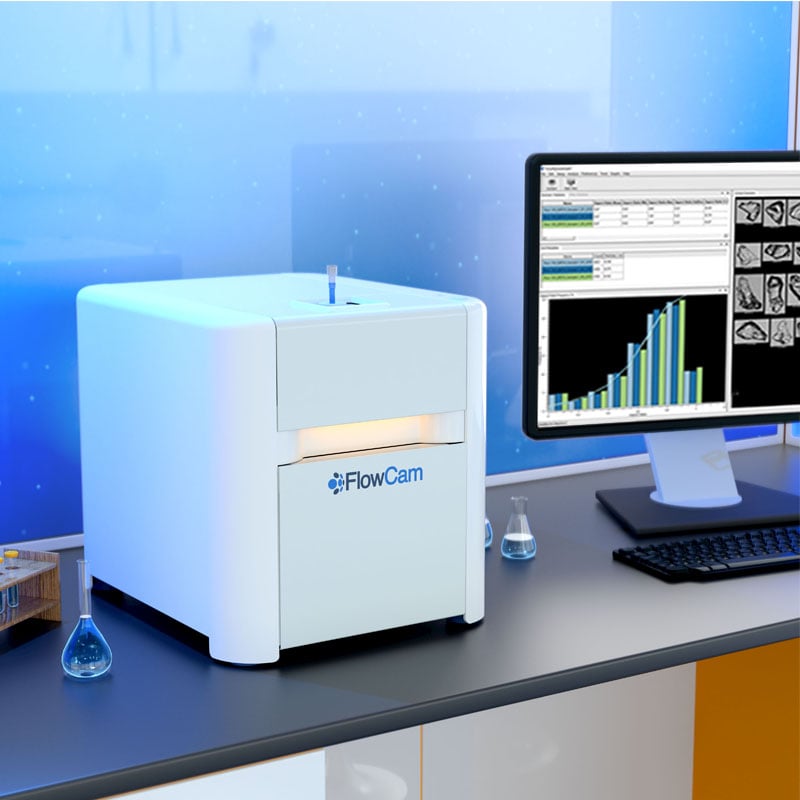
Leading manufacturers use FlowCam 8000 and FlowCam Nano to:
- Perform compliance testing in accordance with ISO and ASTM standards
- Enhance quality assurance and quality control (QA/QC) by monitoring particle uniformity and consistency throughout the production process
- Determine filter performance by comparing image and concentration data pre- and post-separation
- Identify and eliminate contaminants in electronics manufacturing processes to maintain cleanroom compliance
- Evaluate the quality of raw materials as inputs into manufacturing processes
Helpful Resources
“Millions of synthesized particles are analyzed in minutes with FlowCam to provide a robust statistical analysis of their geometry, and rapidly elucidate the roles of the reaction constituents on the particle shape and yield.”
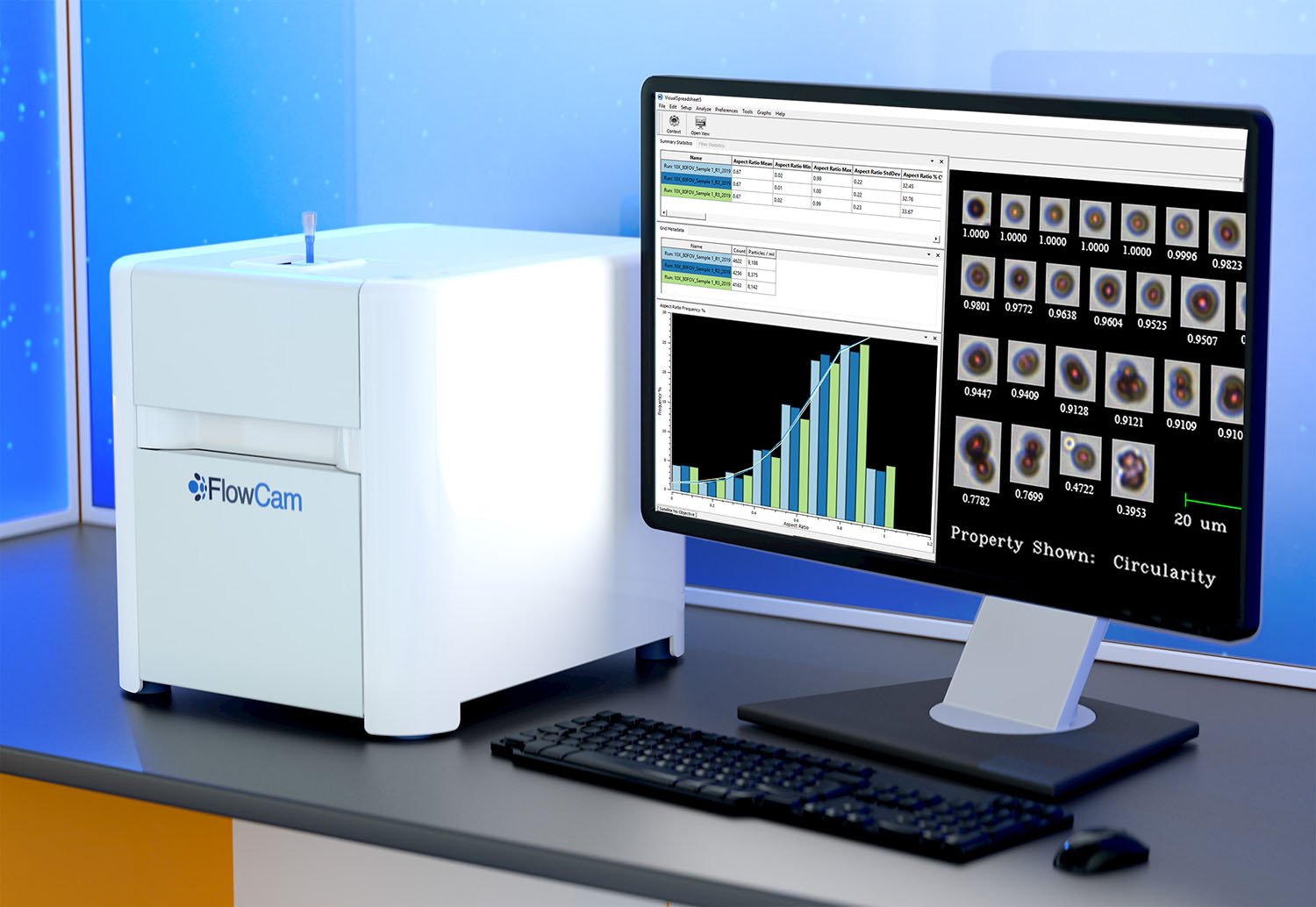
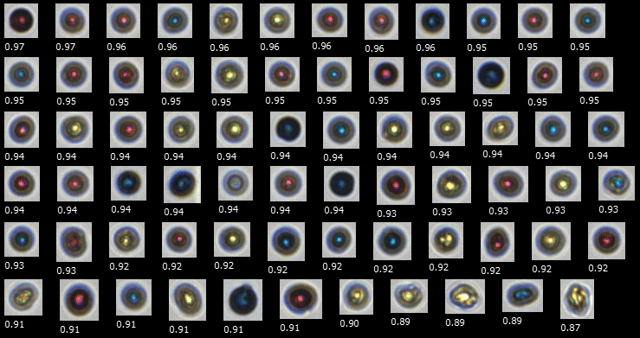
Images of color printer toner particles imaged by FlowCam, shown with sphericity measurements.
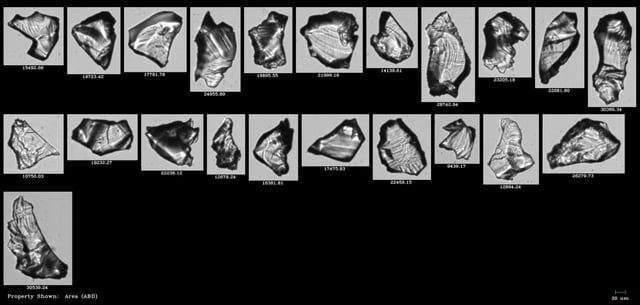
A FlowCam collage of zeolite particles
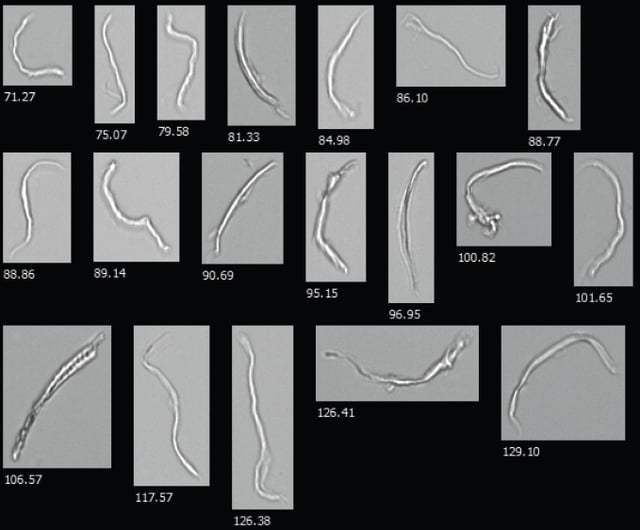
Wood cellulose microfibrils captured by FlowCam
Strengthen QC Workflows with High-Throughput Imaging
With dynamic image analysis, users can efficiently:
- Confirm size, shape, circularity, and material uniformity for printer toner and polymer characterization during and after production
- Evaluate size and shape uniformity of superabrasive particles such as micronized diamonds and cubic boron nitride (CBN)
- Compare material properties across processing stages using parameters specifically designed to accurately measure fiber morphology
- Validate wash water cleanliness
- Visually confirm, quantify, and characterize each particle type
Learn More About Dynamic Imaging Analysis with FlowCam:
-
Dynamic image analysis (DIA) is a powerful technique for characterizing particles in motion, enabling real-time measurement of size, shape, and morphology. By capturing high-resolution images of particles in motion, DIA preserves sample integrity while delivering a more complete and representative view of particle populations than traditional static methods.
Within this broader category, flow imaging microscopy (FIM) — the technology used by FlowCam — is a specific and widely adopted implementation of DIA that combines high-throughput imaging, automation, and quantitative analysis for particles in a fluid suspension.
For manufacturers, this means faster identification of out-of-spec results, more defensible QC data for compliance testing per ISO and ASTM standards, and better traceability for batch documentation.
-
Methods such as laser diffraction and dynamic light scattering report an equivalent spherical diameter, a calculated value that assumes every particle is a sphere. For advanced manufacturing materials where particle shape matters (fibers, irregular abrasives, etc.), this assumption can mask critical quality issues.
FIM generates images of individual particles, enabling direct measurement of morphological parameters such as elongation, circularity, and aspect ratio. It also allows visual discrimination between particle types. This is particularly valuable for electronics manufacturers who need to distinguish contaminants from intentionally manufactured particles.
-
FlowCam instruments cover a broad particle size range to support diverse manufacturing applications. Note that the ranges below depend on the objective and flow cell configuration:
-
FlowCam 8000: 1 µm to 1 mm
-
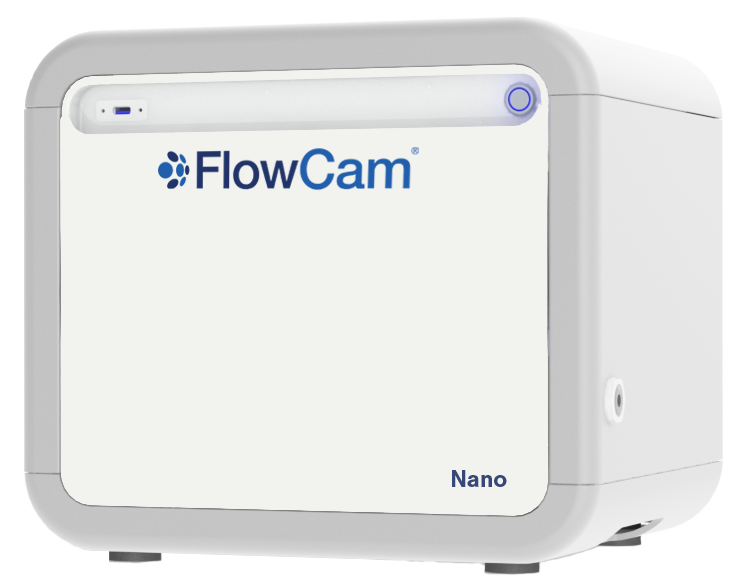
FlowCam Nano: 300 nm to 2 µm
-
FlowCam Macro: 150 µm to 5 mm
-
-
FlowCam 8000 Series users can obtain meaningful results in less than a minute, with as little as 100 μL of sample.
FlowCam 8000 Series instruments are also compatible with ALH for FlowCam automated liquid handling. Users can increase productivity with automated liquid handling for up to 384 samples.
-
FlowCam supports characterization of a wide range of manufactured particles:
-
Synthetic and natural fibers (carbon fiber, glass fiber, etc.)
-
Polymers and polymer powders (toner, adhesives, microplastics, etc.)
-
Superabrasives (diamond, cubic boron nitride (CBN), etc.)
-
Contaminants and particulate matter in process water and wash fluids
-
-
Yes. Dynamic image analysis is well-suited for monitoring cleanliness in cleanrooms and components in electronics manufacturing. FlowCam can analyze particles extracted from components, assemblies, or process fluids — providing size, shape, and morphology data that helps identify contamination type and source. This supports compliance with cleanroom manufacturing standards.
-
FlowCam’s VisualSpreadsheet software exports data in standard formats compatible with common LIMS software and statistical analysis platforms. Data can be structured to align with existing QC reporting templates and documentation workflows. There’s also a 21 CFR Part 11 compliance package available for regulated manufacturing programs.
-
FlowCam is designed to be easy to use and to integrate into pre-existing manufacturing workflows. We also offer a variety of training and support opportunities for new users, both during initial installation and as part of ongoing support, including:
-
Service plans that include preventive maintenance and optional on-site support
-
The FlowCam 8000 Series is the most versatile instrument in our catalog and is ideal for most polymer, fiber, and abrasive characterization. Fine powder analysis requires submicron insights that FlowCam Nano provides, and larger particle and granule analysis workflows are best handled by FlowCam Macro.
Not sure which particle analyzer is best for your manufacturing workflows? Contact us to discuss sample characteristics and determine the most practical investment.
Additional Resources
Technical Notes
Application Notes
Interested in learning more?
-
Get in Touch
Tell us about your application and particle characterization needs.
-
Have a Conversation
We're happy to set up a call to discuss your application and answer your questions.
-
Discuss Next Steps
Expand your knowledge with a seminar, demonstration, sample analysis, or obtain a quote.