


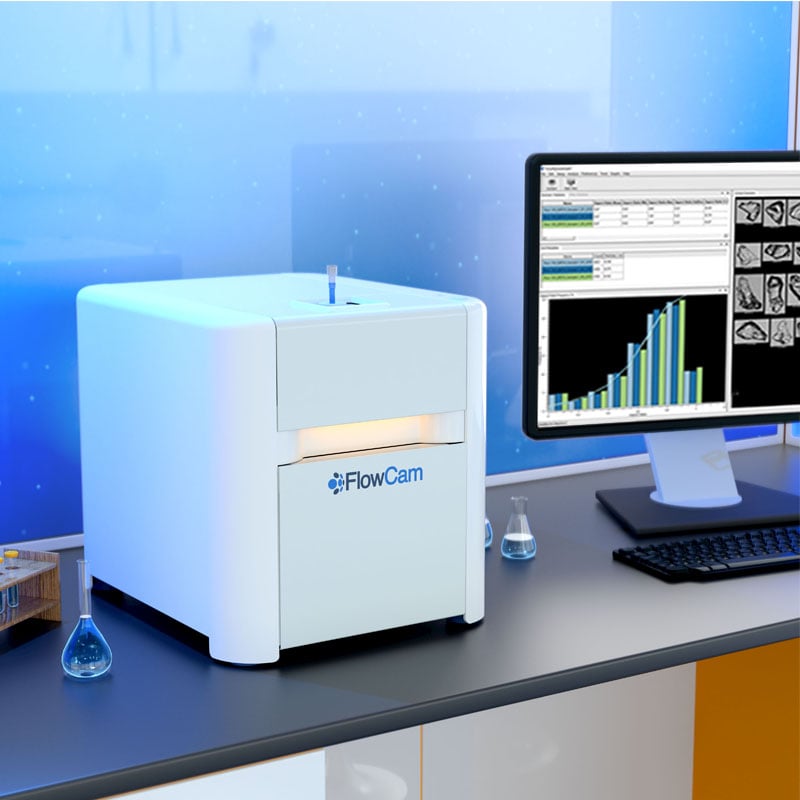



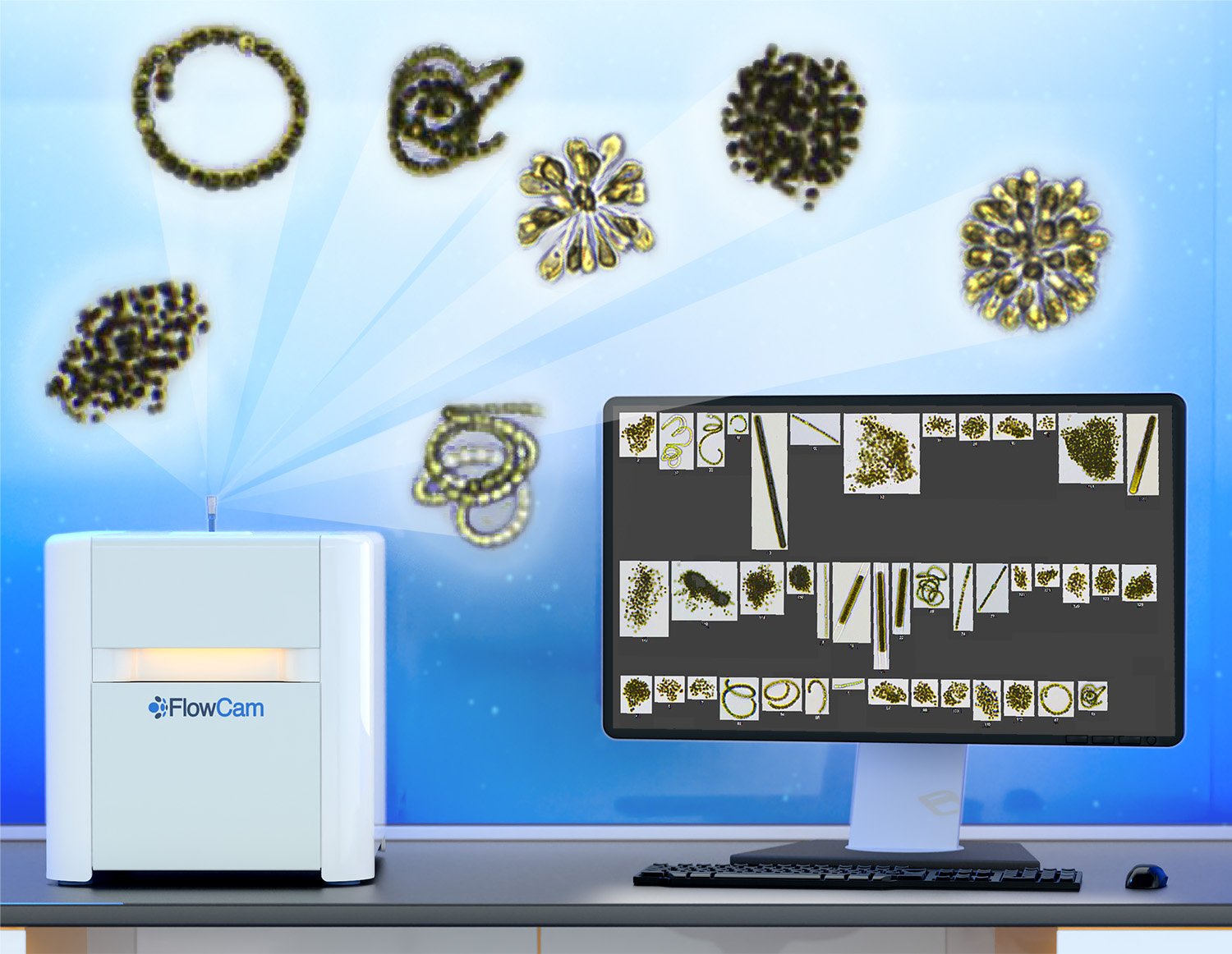
The annual Water Quality Technology Conference is always a great opportunity to meet with customers and share new research. At a recent meeting, Polly Barrowman, Water Markets Manager, presented a case study with Hunter Adams (the Water Quality Supervisor at the City of Wichita Falls Cypress Environmental Laboratory) about their implementation of flow imaging microscopy. Polly and Hunter demonstrate how monitoring particle concentrations and morphology using FlowCam at various points in the water treatment system enabled Hunter's team to address elevated particle counts.
FlowCam is widely used in water quality industries for its speed, accuracy, and high-quality imaging capabilities. Water utilities require Turbidity testing to monitor the particle content in drinking water. Particle counts are not required for drinking water compliance testing, as turbidity testing is assumed to provide all necessary information. However, FlowCam can provide complementary morphology data to help drinking water utilities determine the source of elevated turbidity measurements, which may, in turn, enable them to mitigate particle count issues.
In drinking water treatment plants, knowing particle size distribution and morphology information at various points in the treatment process can help operators determine filter performance, optimize treatment efficiency, and protect public health. Water sampling at pre-determined points in the plant, in conjunction with knowledge of historical particle distribution at each point, helps create a picture of overall water quality.
 Following the implementation of FlowCam technology, plant managers at Wichita Falls Cyprus Environmental Laboratory (pictured here) noticed elevated concentrations of particles in one of their water treatment plants. After analyzing turbidity and concentration data alongside particle morphology information, they extended filter run times, returning the particle count to normal levels.
Many water utilities use FlowCam for algae monitoring and to avoid issues.
Curious about how FlowCam can help with water quality monitoring at your municipal water utility?
You can watch the recording of a similar webinar by Hunter Adams.
HAB Monitoring and Particle Characterization in a Municipal Environmental Laboratory
Or download this article, published in the Journal of American Water Works Association:
Water Quality Monitoring Using Particle Analysis