




Climate change, eutrophication, and harmful algal blooms are changing how Europe's lakes and reservoirs are monitored. Monitoring programs need faster, more scalable ways to generate quantitative data without abandoning established analytical methods. How can established methods benefit from imaging technologies like FlowCam?
Across Europe, laboratories and water utilities are facing increasing pressure to monitor freshwater ecosystems more frequently. Harmful algal blooms are becoming more common, bloom seasons are extending, and extreme weather events can alter phytoplankton communities within days.
At the same time, monitoring programmes must satisfy a range of legislative requirements that differ depending on whether the goal is ecological assessment, recreational water safety, or drinking water protection.
To help navigate this landscape, we have developed a new white paper exploring how FlowCam fits within three key European freshwater monitoring frameworks:
- Water Framework Directive (WFD)
- Bathing Water Directive (BWD)
- Drinking Water Directive (DWD)
Rather than focusing on the legislation alone, the guide examines how these frameworks are implemented across Europe, the quantitative information they require, and where high-speed imaging can complement established monitoring workflows.
Download White Paper | FlowCam in European Freshwater Monitoring
Monitoring Goals Across the Water Framework, Bathing Water, and Drinking Water Directives

Although all three directives concern freshwater ecosystems, they address different monitoring questions.
The Water Framework Directive evaluates the ecological status of lakes and rivers using metrics such as phytoplankton biovolume and community composition.
The Bathing Water Directive manages bathing water quality to protect public health, including during cyanobacterial bloom events.
The Drinking Water Directive introduces a risk-based approach to source water monitoring, helping utilities understand bloom development before treatment is affected.
Despite these different objectives, all three frameworks rely on quantitative information about phytoplankton and cyanobacteria.
How FlowCam Supports Phytoplankton and Cyanobacteria Monitoring
Across Europe, quantitative phytoplankton monitoring is still centered on the Utermöhl sedimentation technique, first introduced by German limnologist Hans Utermöhl in 1931 and later standardized in 1958. Today, the method is codified in DIN EN 15204 and remains the reference approach for many regulatory and accredited phytoplankton monitoring programs.
The method provides the taxonomic resolution required for accredited ecological assessment but requires sedimentation followed by manual microscopic analysis. This makes it highly robust, but also time-intensive when large numbers of samples must be processed.
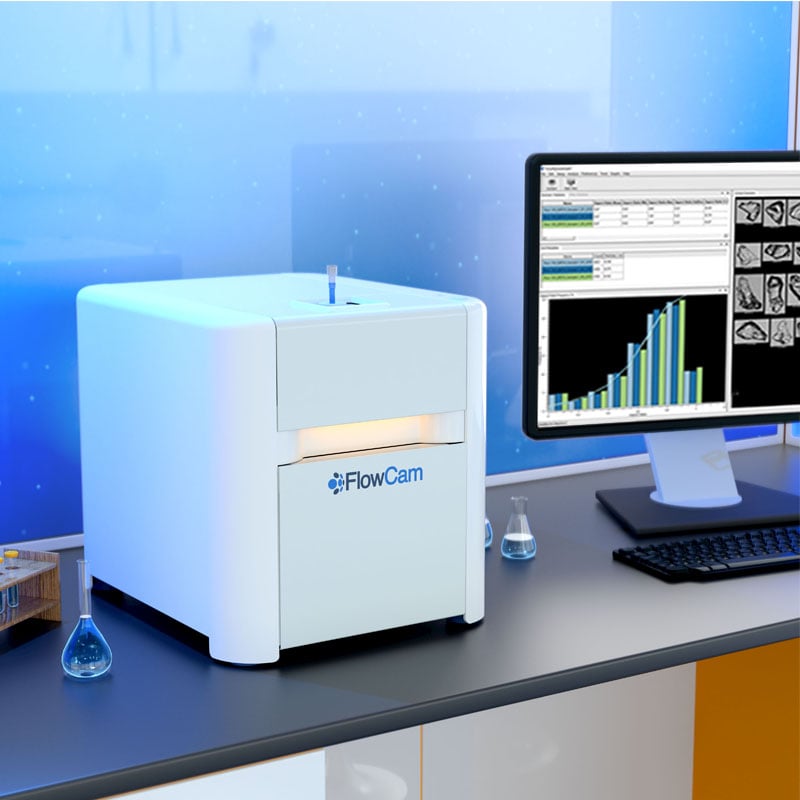
This is where FlowCam can add practical value, particularly when speed, frequency and documentation become limiting. FlowCam generates rapid image-based measurements of particle abundance, biovolume and community structure, together with a permanent image archive. It can help teams screen bloom samples quickly, increase monitoring frequency and document results alongside established microscopy.

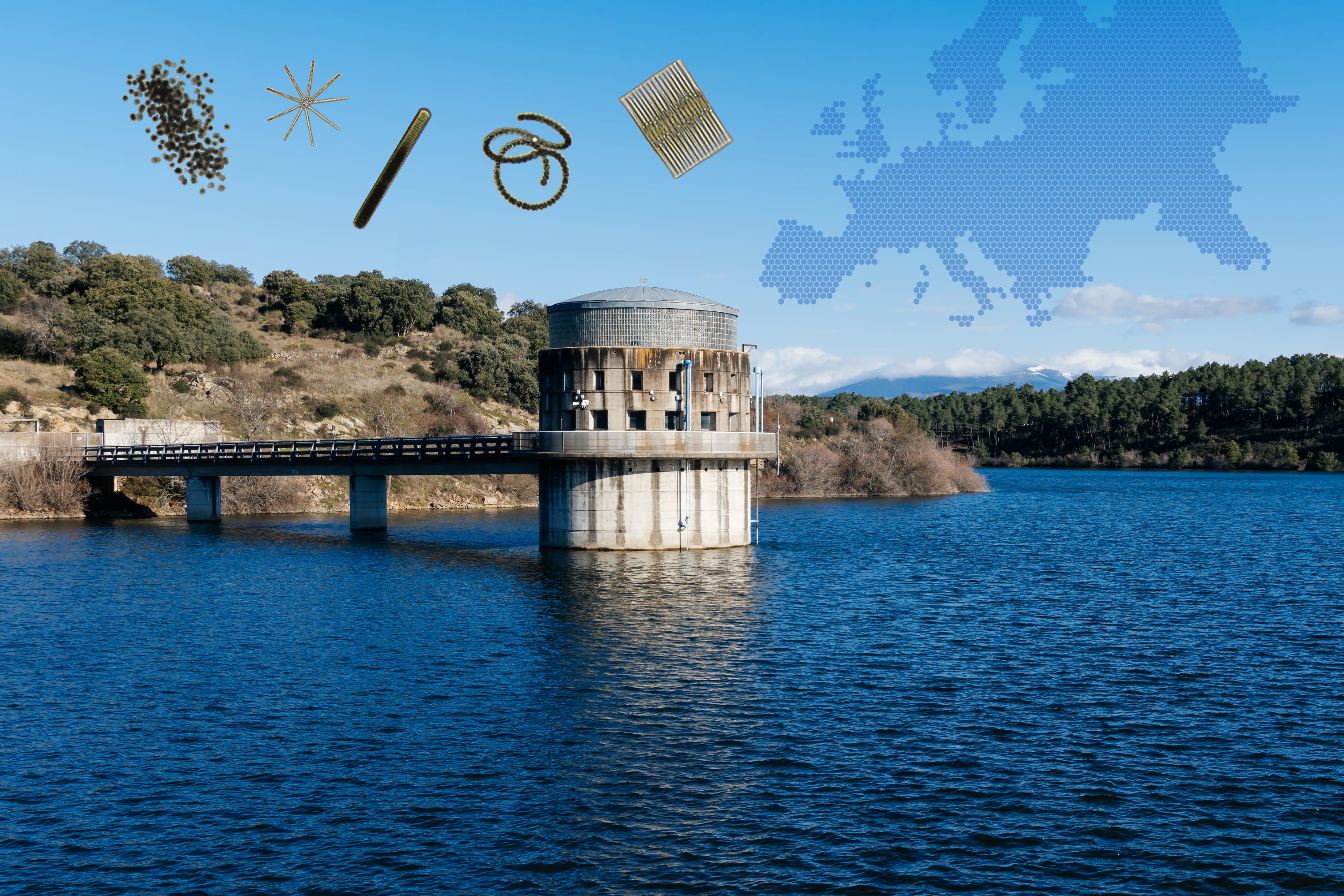
Pictured above: FlowCam uses fluorescence-triggered imaging to (a) isolate relevant particles and classify key algal groups, and (b) link trends in community structure to early warning signs which allows for timely management decisions.
Freshwater Monitoring Requirements Across European Countries
The directives set the overall requirements, while Member States decide much of the practical detail through their national monitoring programmes.
For example, some countries use biovolume-based thresholds for cyanobacterial management, while others rely primarily on visual assessment supported by targeted laboratory analyses. Likewise, the need for phytoplankton monitoring under the Drinking Water Directive depends heavily on whether drinking water is sourced from lakes and reservoirs or from groundwater.
Understanding these national differences is often just as important as understanding the legislation itself.
 Pictured above: National implementation of WFD phytoplankton monitoring requirements, from EU Directive to laboratory analysis and ecological status reporting. Examples shown for Germany (Umweltbundesamt / Bundestaxaliste), United Kingdom (UKTAG), and Austria (Brettum index).
Download the White Paper: FlowCam for European Freshwater Monitoring
 The white paper looks at these differences in more detail, including where FlowCam is already being used or evaluated to support routine monitoring, bloom response and source water decision-making.
Whether you work in environmental monitoring, freshwater research or drinking water management, the guide provides a practical overview of:
- the three major European freshwater directives;
- how monitoring differs between Member States;
- the role of quantitative imaging within established laboratory workflows; and
- published examples of FlowCam applications in European freshwater monitoring.
Do you work in phytoplankton monitoring in Europe? We want to know how your programme operates: