

Freshwater Monitoring in Europe: Understanding Where Imaging Fits
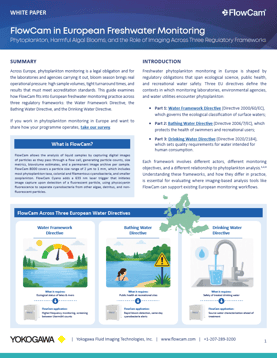
Phytoplankton monitoring plays an essential role in protecting Europe's lakes, rivers, recreational waters, and drinking water supplies. Yet laboratories, environmental agencies, and water utilities face increasing pressure to process more samples, respond quickly to bloom events, and maintain scientifically defensible results.
This white paper explores how image-based particle analysis can support freshwater monitoring programmes operating under three key European regulatory frameworks: the Water Framework Directive, the Bathing Water Directive, and the Drinking Water Directive. Drawing on published research, regulatory guidance, and real-world monitoring examples, it examines where tools such as FlowCam can complement established methods like Utermöhl microscopy.
Readers will learn:
- How phytoplankton and cyanobacteria are monitored across different European regulatory contexts
- The strengths and limitations of traditional microscopy and image-based analysis
- How monitoring programs in countries such as Austria, Belgium, Germany, the Netherlands, Spain, and the UK approach phytoplankton assessment
- Where rapid imaging can help improve throughput, documentation, and decision-making during bloom events
Whether you work in environmental monitoring, water quality management, public health, or drinking water treatment, this guide provides a practical overview of current monitoring approaches and the evolving role of imaging technologies in European freshwater programs.
Download the white paper using the form on this page to explore the science, regulations, and monitoring strategies shaping freshwater management across Europe.
Do you work in phytoplankton monitoring in Europe? We want to
know how your programme operates! Take our survey