




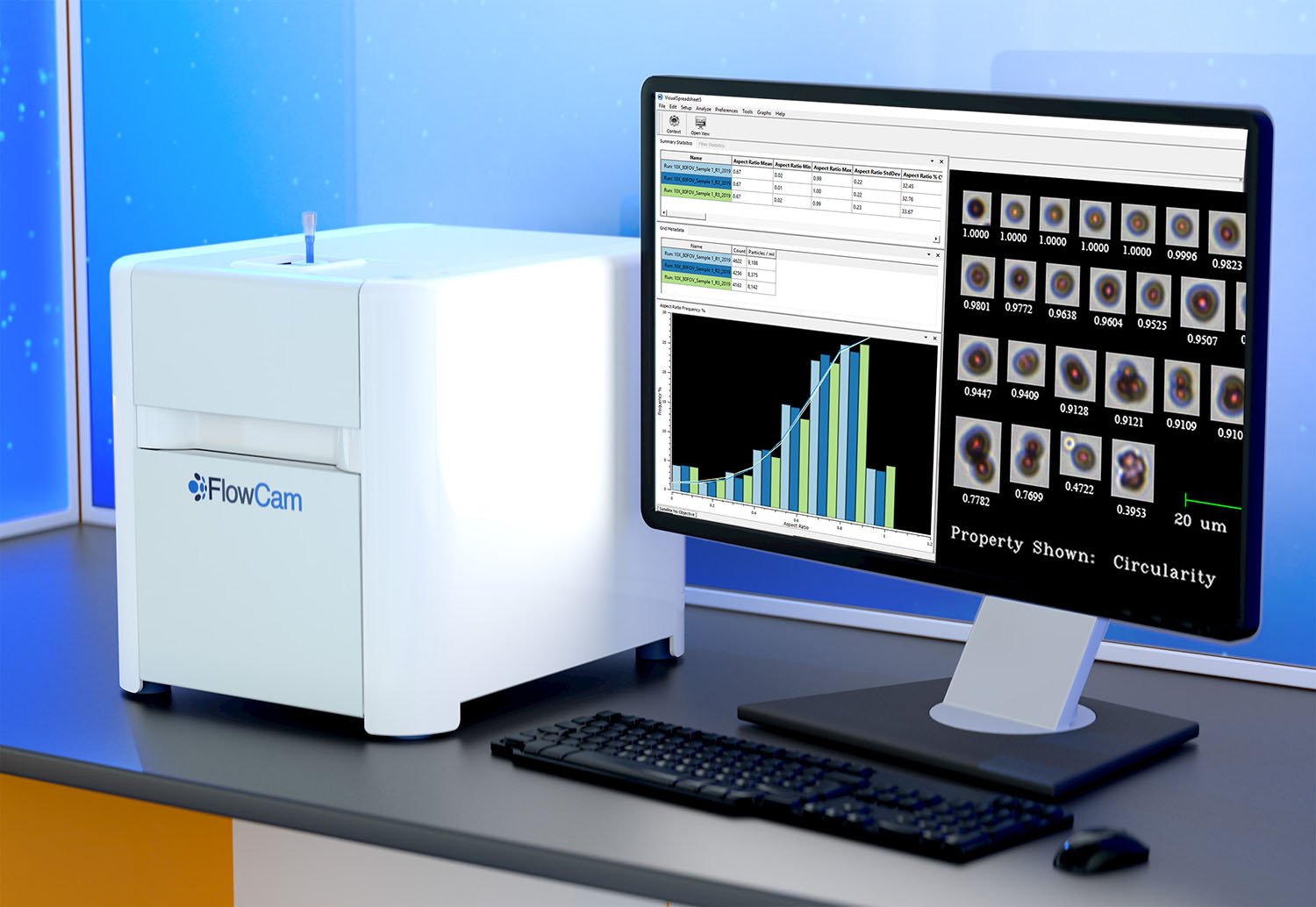
What is FlowCam, and how is it used for Flow Imaging Microscopy?
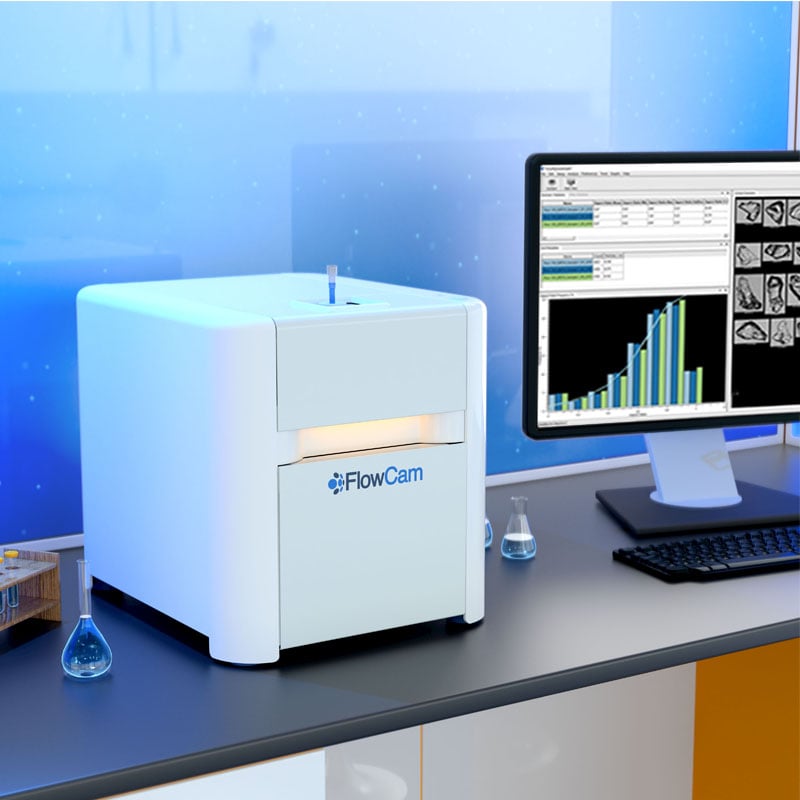
FlowCam is a precision flow imaging microscopy (FIM) instrument that captures high-resolution digital images of subvisible particles and microorganisms in a flowing liquid. It's an advanced type of imaging particle analyzer that combines the fluidic architecture of flow cytometry with microscopy to capture real-time images with speed and fidelity.
How is Flow Imaging Microscopy (FIM) Different from Traditional Particle Analysis?
Unlike traditional particle counting and sizing methods, which provide limited information about particles, FlowCam provides visual confirmation and detailed morphological metrics (shape, color, transparency, etc.), allowing biopharmaceutical scientists, environmental researchers, and water quality managers to differentiate particle and microorganism types in complex mixtures with specificity.
A flow imaging microscopy instrument like FlowCam:
- Draws a liquid sample through a flow cell, illuminates it, and captures digital images of individual particles as they pass through the camera's field of view
- Calculates size, shape, count, color, fluorescence, and morphology (rough, smooth, elongated, aggregate, etc.) data directly from images
- Allows you to visualize particles so that they can be evaluated for distinguishing features
- Is both fast (like a particle counter) and precise (like a microscope)
How Do Scientists Use FIM with FlowCam for Particle Analysis?
FlowCam was originally developed in the late 1990s by marine scientists from Bigelow Laboratories for Ocean Sciences who needed a better way to analyze phytoplankton in seawater, and designed to combine the benefits of digital imaging, flow cytometry, and microscopy into a single linstrument1.
FlowCam was so efficient at enumerating, measuring, and classifying microscopic aquatic organisms that scientists worldwide are now using it in oceanographic and freshwater research!
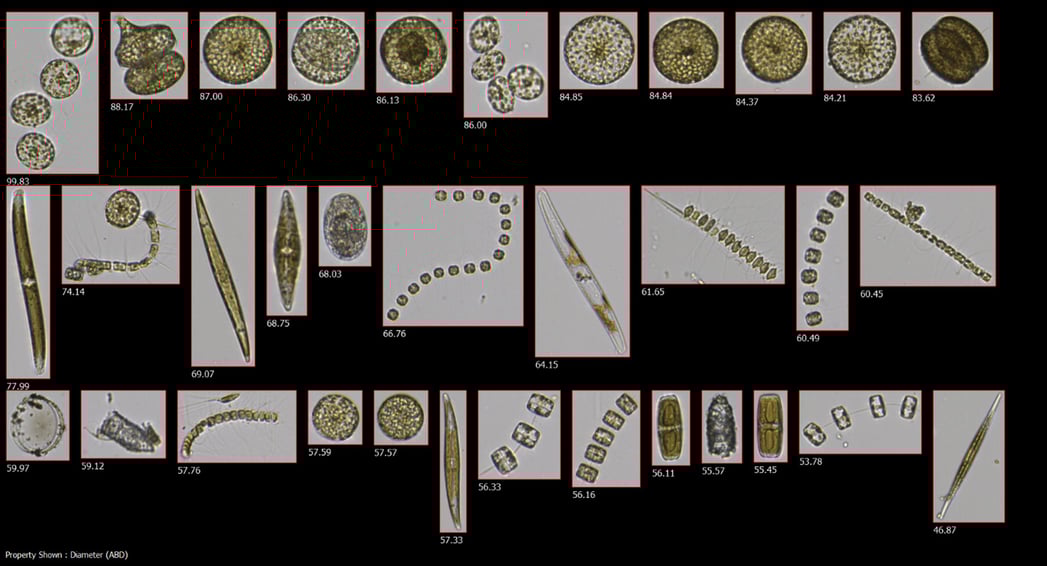 Plankton sampled from the Harraseeket River estuary in Freeport, Maine using FlowCam 8400 at a 10X magnification.
It wasn't long before biopharmaceutical scientists adapted FlowCam's technology to accurately characterize protein aggregates and other subvisible particles in biologics, biosimilars, vaccines, and other parenteral drugs.
FlowCam is now a core instrument in biopharmaceutical particle analysis, trusted by companies and the FDA alike to characterize particles in injectable drugs, helping meet regulatory standards for safety and stability, supporting formulation, quality control, and recall efforts2.
FIM with FlowCam provides size, shape, and count data that traditional methods, such as light obscuration, miss. Its ability to visualize morphology alongside size makes it vital for detecting protein aggregates, bubbles, and contaminants. This ensures compliance with USP requirements for injectable biologic products, including protein therapeutics and next-generation cell and gene therapies.
The Commercial Impact of Flow Imaging Microscopy with FlowCam
Today, the imaging capabilities of FlowCam extend well beyond its uses in environmental research and biopharma to a variety of additional particle analysis applications. FlowCam provides high-resolution particle data for quality control (QA/QC), research and development, and process monitoring across a wide range of products, from abrasives to microencapsulated ingredients.
Here are just some of the areas where FlowCam is advancing flow imaging microscopy and particle analysis in research and manufacturing worldwide:
Aquatic Applications:
FlowCam's environmental monitoring and research applications:
- Water quality monitoring
- Plankton research
- Aquaculture
- Microalgae cultivation
- Paleolimnology
- Microplastic studies
- Invasive species detection
Biopharma Applications:
FlowCam particle analysis for biopharmaceutical development:
- Protein therapeutics
- Cell therapy
- Gene therapy
- Other biotherapeutics and pharmaceuticals
Materials Characterization Applications:
FlowCam provides advanced materials analysis and characterization across industries:
- Food and beverage production
- Agricultural research and production
- Advanced materials manufacturing
- Cleanroom monitoring
- Chemical manufacturing (printer toner, paints, detergents)
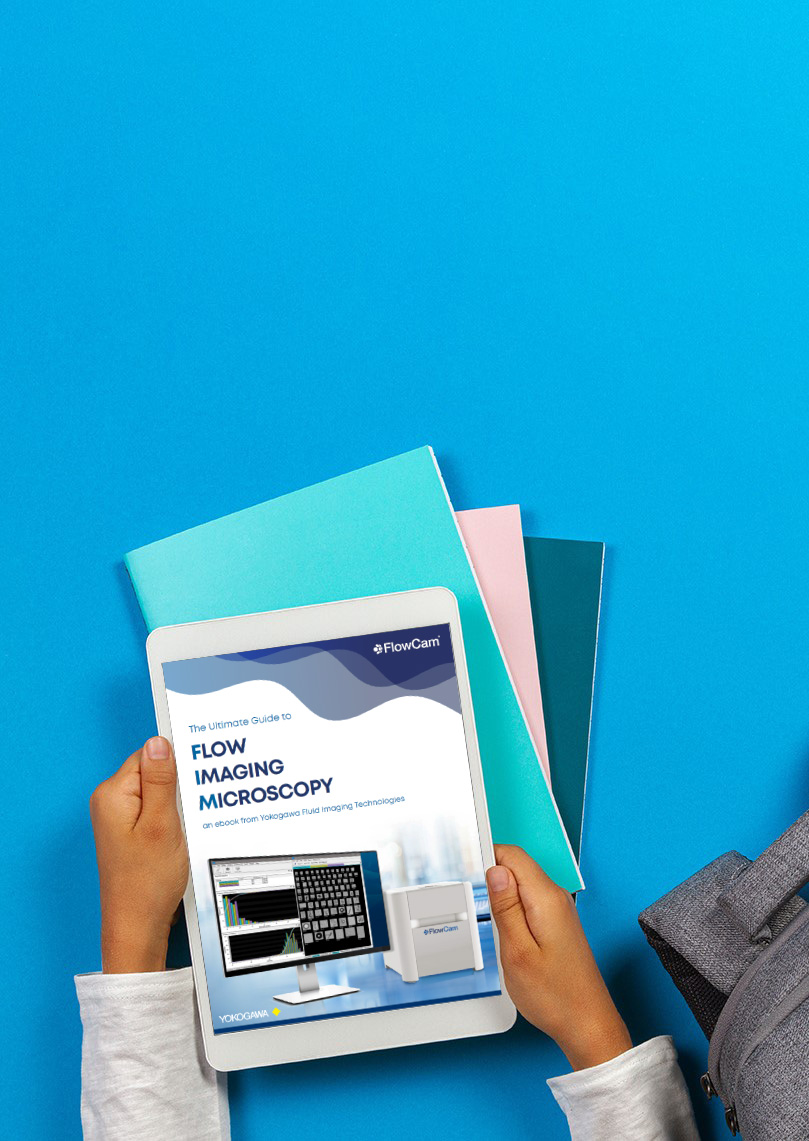
Curious to explore more? Download the Ultimate Guide to Flow Imaging Microscopy to learn what FlowCam technology can do for you.
References
1. Sieracki, C. K., Sieracki, M. E., & Yentsch, C. S. (1998). An imaging-in-flow system for automated analysis of marine microplankton. Marine Ecology Progress Series, 168, 285–296. http://www.jstor.org/stable/24828385
2. Subvisible Particle Content, Formulation, and a Dose of an Erythropoietin Peptide Mimetic Product are Associated with Severe Adverse Postmarketing Events. Kotarek, Joseph et al. Journal of Pharmaceutical Sciences 2016, Volume 0, Issue 0, DOI:10.1016/S0022-3549
http://jpharmsci.org/article/S0022-3549(15)00180-X/abstract