




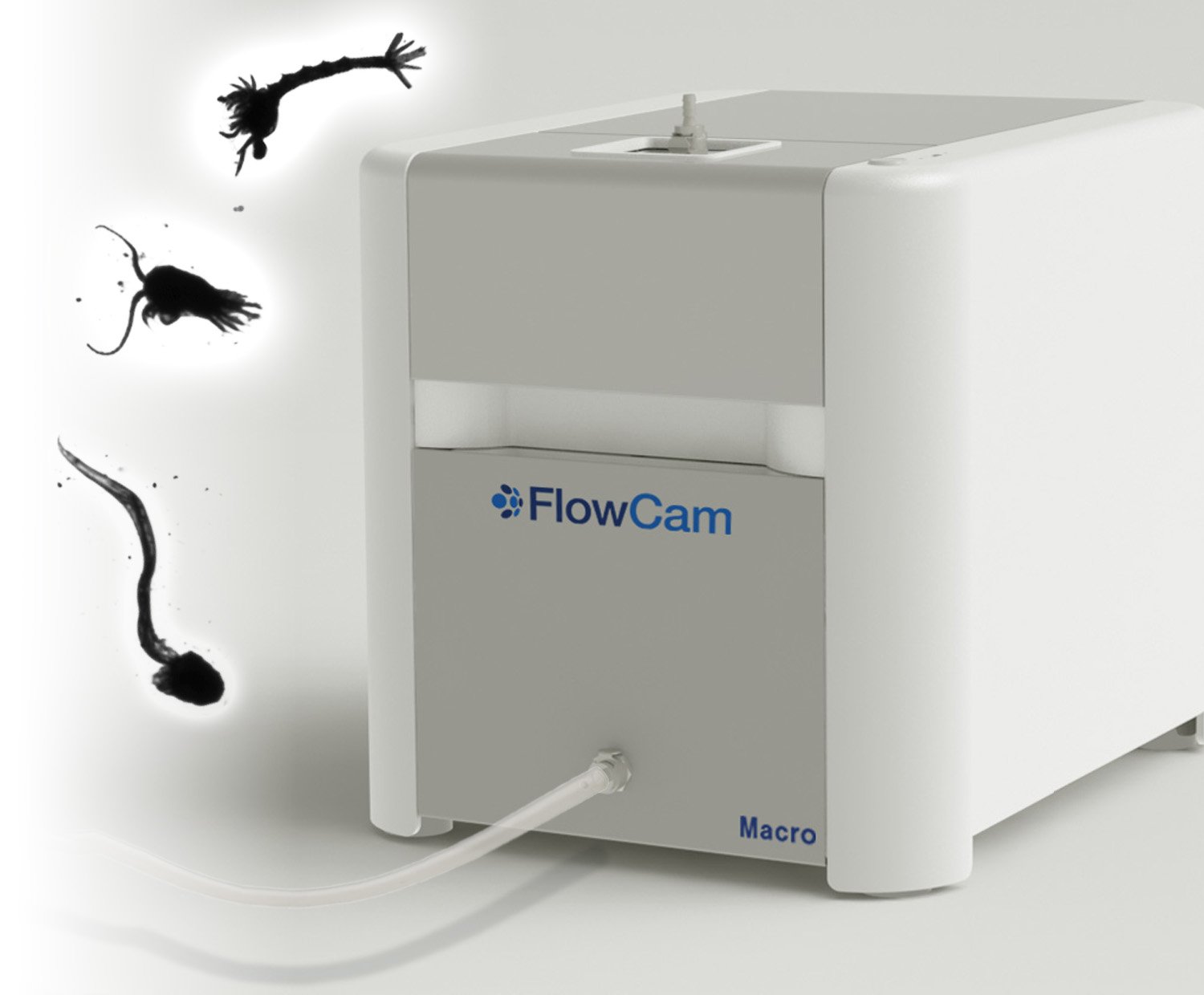
Zooplankton are essential links in aquatic food webs, transferring energy from microscopic primary producers like phytoplankton to fish, marine mammals, and other higher trophic organisms. Accurate analysis of zooplankton populations helps researchers, regulators, and aquaculture professionals gain a deeper understanding of ecosystem health, food web dynamics, and environmental change. Advanced imaging technologies, such as FlowCam Macro, now enable rapid, high-resolution analysis of these larger planktonic organisms, providing both quantitative data and detailed visual records.
To fully appreciate the ecological importance of zooplankton, it is helpful to consider their relationship with phytoplankton—the microscopic, photosynthetic organisms that form the foundation of aquatic ecosystems. Together, phytoplankton and zooplankton represent the two primary functional groups of plankton, each playing distinct yet interconnected roles in energy transfer and nutrient cycling within marine and freshwater environments.
While many people are familiar with the term plankton, fewer understand the critical differences between phytoplankton and zooplankton. This article breaks down the differences, explores the importance of zooplankton
and highlights how FlowCam Macro, an advanced flow imaging microscope, enables rapid analysis of these essential organisms.
What Are Phytoplankton?
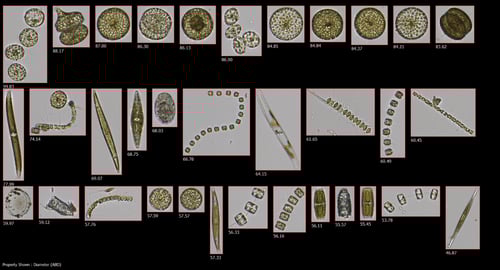 Phytoplankton are single-celled primary producers (also known as autotrophs) that use photosynthesis to generate energy, much as plants do. Phytoplankton are some of the most abundant and widespread planktonic organisms, living in the photic zone (upper layer) of rivers, lakes, and oceans.
Pictured here: a FlowCam collage of phytoplankton collected in Maine's Damariscotta River.
What Are Zooplankton?
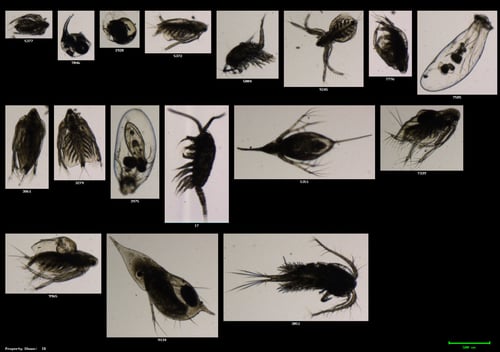 Zooplankton act more like tiny fish, feeding on phytoplankton. They include both protists and members of the animal kingdom. These organisms play a pivotal role in aquatic food chains, bridging primary producers (phytoplankton) and higher trophic levels, including fish and mammals. Zooplankton are also sensitive barometers of environmental change, making them key bioindicators in water quality monitoring and ecosystem health assessments.
Pictured here: a FlowCam Macro collage of zooplankton collected in Germany's Lake Stechlin.
Zooplankton vs. Phytoplankton: Key Differences
The following table highlights the key differences between zooplankton and phytoplankton:
| Feature | Zooplankton | Phytoplankton |
| Nutritional Type | Heterotrophic (consumes others) | Autotrophic (photosynthesizes) |
| Mobility | Active swimmers | Mostly passive drifters |
| Role in Ecosystem | Primary consumers | Primary producers |
| Examples | Copepods, rotifers, larval fish | Diatoms, cyanobacteria, dinoflagellates |
Why are Zooplankton Important?
Phytoplankton groups, including diatoms, cyanobacteria, and green algae, form the base of aquatic food webs. These organisms are rich in lipids and serve as food for zooplankton, including copepods, rotifers, water fleas, protozoans, and the larval stages of larger aquatic animals such as fish, brine shrimp, oysters, crabs, and jellyfish. By consuming phytoplankton, zooplankton play a significant role in transferring materials and energy to higher trophic levels, including fish, birds, marine mammals, and humans.
Environmental and oceanographic factors continuously influence the abundance, composition, nutritional quality, and spatial distribution of zooplankton. These factors include the abundance and type of phytoplankton present in the water, as well as water temperature, salinity, oxygen, and pH. This makes monitoring zooplankton essential for detecting changes in, and evaluating the status of, aquatic ecosystems.
Why Zooplankton Analysis Matters
Zooplankton analysis is more than academic—it’s a cornerstone of research in aquatic ecology, environmental monitoring, and aquaculture management. Imaging, identifying, and counting zooplankton is relevant for:
- Researchers to monitor biodiversity, ecosystem health, and invasive species
- Regulatory agencies to assess water quality, support sustainable fisheries, and mitigate the effects of pollution
- Aquaculture managers to monitor larval quality, establish growth curves, and detect contaminants in hatcheries or growing areas.
Using FlowCam Macro to Study Zooplankton
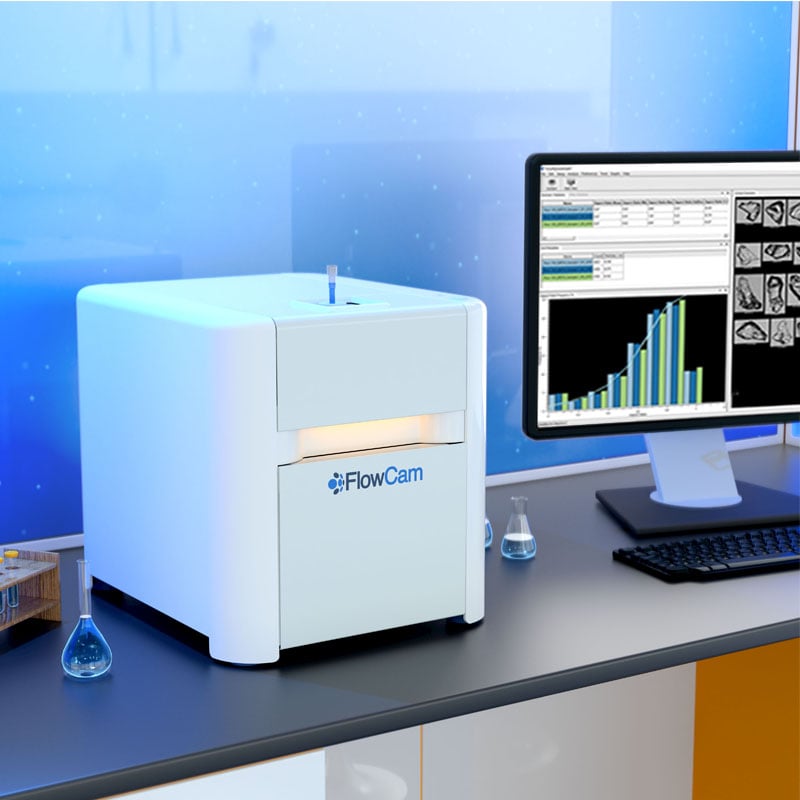
FlowCam Macro is a powerful imaging instrument designed to analyze larger organisms (150 µm to 5 mm), including zooplankton, in a flowing liquid sample. It combines digital imaging with the principles of flow cytometry to capture high-resolution images of individual plankton in flow.
Zooplankton communities are traditionally studied using manual microscopy. However, manual observation and record keeping with a microscope can be difficult, and certain measurements—like size and biovolume—can be prohibitively time-consuming, limiting the ability to scale data collection.
Consequently, many researchers are seeking solutions that expand their capacity for zooplankton observation. By increasing throughput and maximizing the amount of data extracted from a single sample, researchers can maximize the data they can derive from their sampling efforts to avoid leaving valuable insights on the table.
Key benefits of FlowCam Macro for zooplankton imaging include:
- Real-time analysis: Analyze live organisms in near-real time—in the lab, or at sea—without needing to fix or stain samples.
- High Throughput: Process large sample volumes rapidly, with speeds up to 500 mL per minute.
- Classification tools: Use native tools like particle property files ot organize large datasets, and/or export to platforms like EcoTaxa to accelerate image classification and validation.
- Quantitative & Qualitative Data: Measure size, shape, and abundance while capturing morphological details to support taxonomic identification.
- Digital images: Produce a digital record of data and images to support funding requirements, future reinterrogation, and/or to provide a taxonomy training tool for analysts.
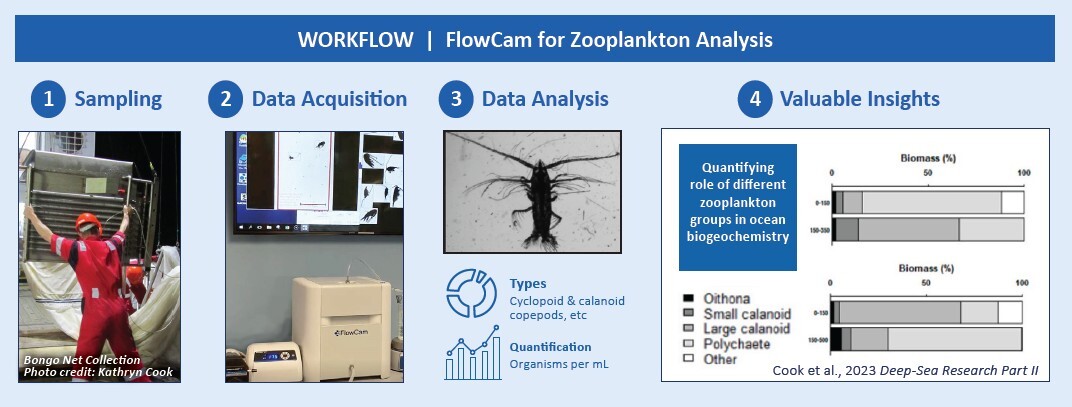
Taxonomic identification of zooplankton is foundational to aquatic science and resource management. Research groups around the world use FlowCam to streamline zooplankton analysis in both marine and freshwater environments using workflows similar to the one pictured above.
Applications of Zooplankton Imaging
Zooplankton imaging with FlowCam Macro has broad applications, including:
- Ecological research: Studying food webs and trophic dynamics
- Aquaculture: Monitoring plankton
- Climate studies: Understanding plankton shifts in response to ocean warming or acidification
With tools like FlowCam Macro, researchers, regulatory programs, and aquaculture facilities can use automation and digital imaging to improve efficiency. Whether you are monitoring a freshwater lake, a tidal estuary, or the open ocean, advanced zooplankton imaging is now faster than ever.
Download a case study showcasing how Dr. Kathryn Cook used FlowCam Macro to study zooplankton at the National Oceanography Centre.