




From the Southern Ocean to the Lab
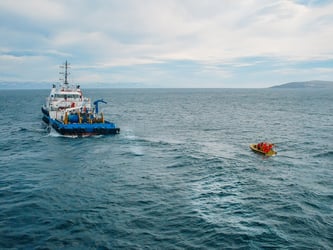
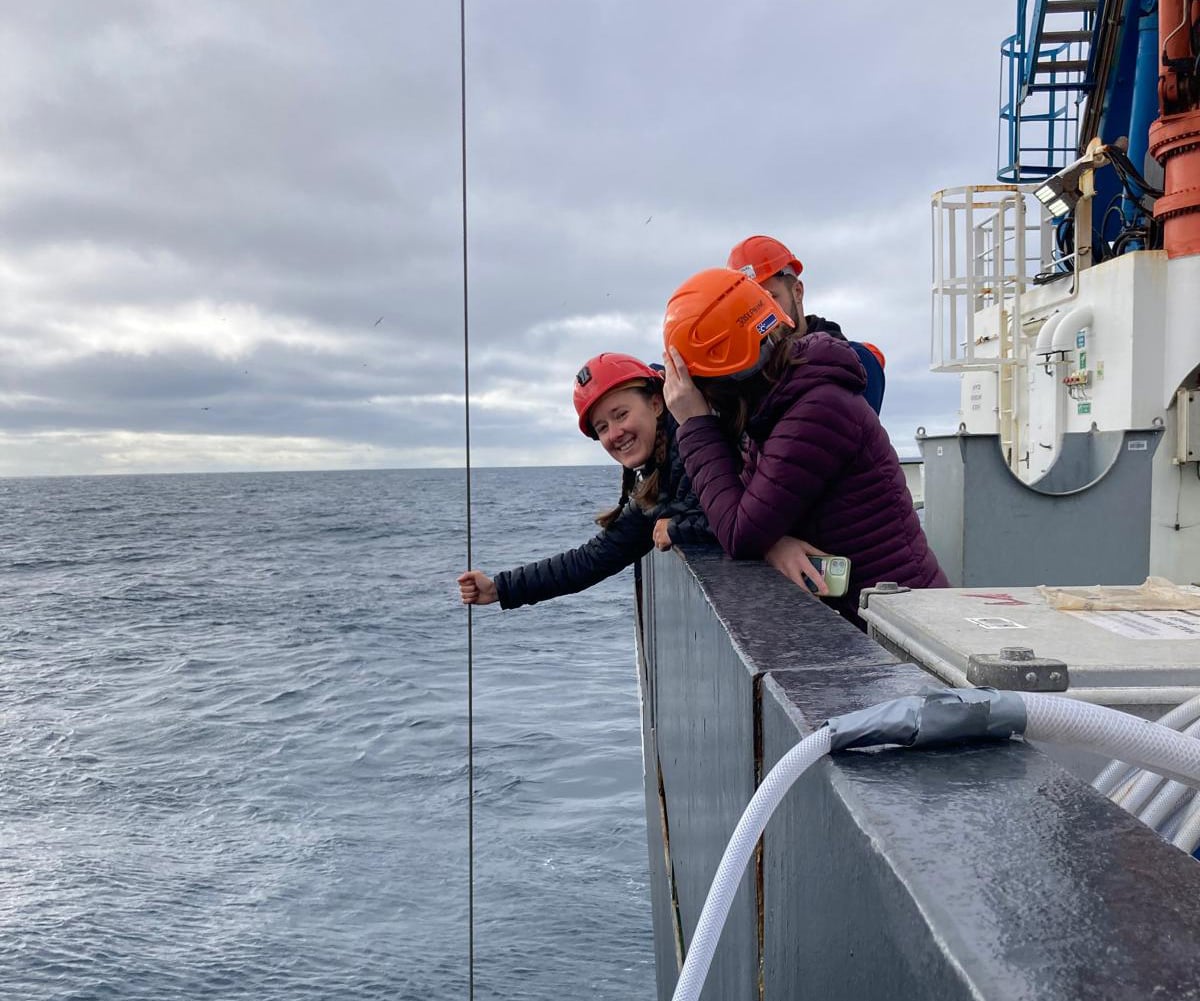
In the Scotia Sea, south of the Falkland Islands, a research vessel is hauling a net through Antarctic waters. On board, scientists from the OceanPlankton research group (then based at the National Oceanography Centre in Southampton and now based at the University of Exeter) and the British Antarctic Survey are collecting mesozooplankton samples from eight depth layers—from 500 meters to the surface.
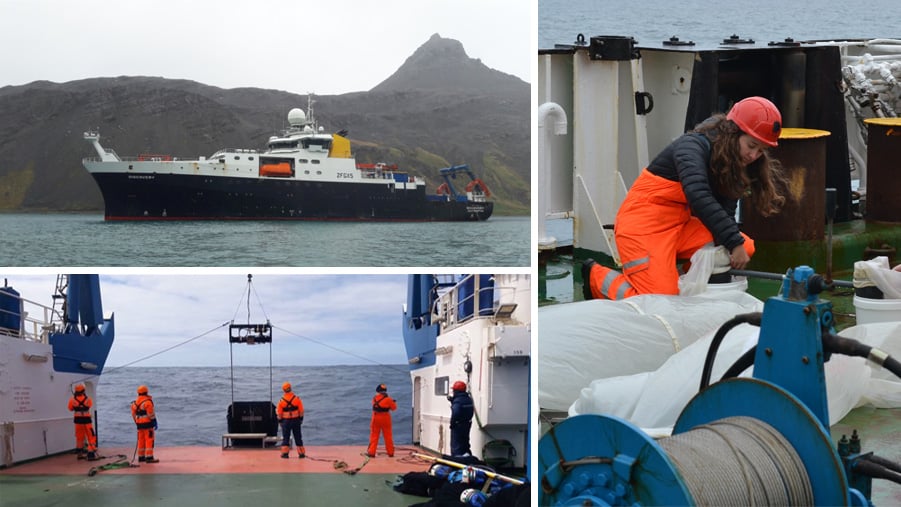
(Top left) RRS Discovery with South Georgia Island in the background during the DY086 Expedition, from which the samples were collected. Photo courtesy of Dr. Kathryn Cook. (Bottom left) The MOCNESS (Multi-net) being recovered on the back deck of the ship during the 2017 expedition to the Scotia Sea. Photo courtesy of Dr. Kathryn Cook. (Right) Eloïse Savineau recovering a zooplankton sample from a Bongo net. Photo courtesy of Arianwen Herbert.
 Back in the lab, those same samples will be processed two different ways and compared in a new peer-reviewed study in the Journal of Plankton Research (Savineau et al., 2026). This study compares FlowCam Macro directly against traditional stereomicroscopy for characterizing mesopelagic copepod communities—and the results support the use of FlowCam Macro as a reliable, time-efficient approach for broad-level community analysis in large-scale zooplankton research.
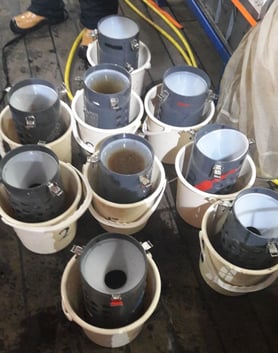
9 depth-stratified zooplankton samples retrieved from the 9 nets on the MOCNESS multinet deployed in the Scotia Sea in 2017. Photo courtesy of Dr. Kathryn Cook.
The Challenge: Scaling Up Zooplankton Analysis
Copepods dominate mesozooplankton communities throughout the water column, often accounting for more than 70% of total biomass (Cook et al. 2023). Understanding how copepod communities shift with depth, season, and environmental change is fundamental to ocean science and demands the processing of large numbers of net samples.
Traditional stereomicroscopy is a rigorous and well-established approach for this work, capable of identifying individuals to genus and species level. But for large oceanographic datasets involving dozens of depth-stratified nets, the time investment is significant: an experienced taxonomist can expect to spend 8 to 16 hours per sample. For a 32-sample cruise dataset like the one in this study, time adds up fast.
It was this practical reality that led the team to evaluate whether FlowCam Macro could offer a reliable and efficient alternative for broad-level community analysis.
Mesozooplankton Community Analysis: Two Methods, 32 Samples
The team used zooplankton samples collected during a research cruise to the Scotia Sea aboard the RRS Discovery. A net system sampled mesozooplankton at eight depth intervals from 500 to 0 meters, preserving organisms in formaldehyde for later analysis.
Each of the 32 net samples was then processed by two methods:
- Stereomicroscopy: carried out at the National Marine Fisheries Institute Plankton Sorting and Identification Centre in Poland, targeting >500 individual zooplankton per aliquot with identification to genus and species level.
- FlowCam Macro: carried out at the National Oceanography Centre, targeting 2,000 particles per aliquot, classified into nine broad taxonomic groups using FlowCam’s VisualSpreadsheet software.
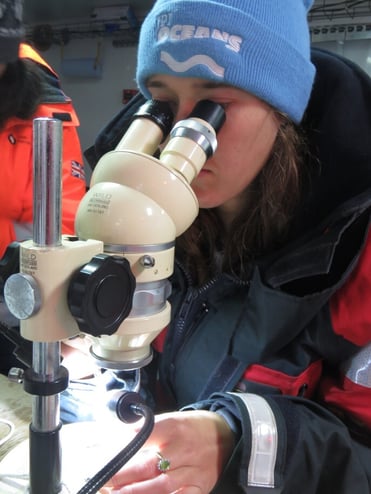
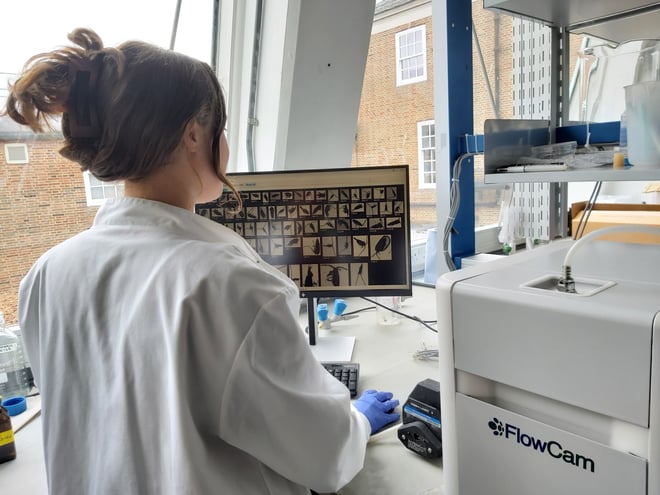
(Left) Eloïse Savineau choosing live zooplankton species of interest using a microscope whilst on the RRS Discovery in the Iceland Basin in 2024. (Right) Eloïse analyzing zooplankton samples with FlowCam Macro in the OceanPlankton lab at the University of Exeter.
The resulting community compositions were compared using statistical approaches including PERMANOVA and NMDS ordination—robust multivariate tools widely used in ecological research.
Broad-Level Community Compositions Obtained With FlowCam Macro Were Highly Consistent With Those From Traditional Microscopy
The NMDS ordination plot tells the story visually—FlowCam Macro classifications clustered largely within the microscopy grouping, with overlapping 95% confidence ellipses (Figure 1). Statistically, while the analysis method did have a small but significant effect on composition (accounting for ~7% of explained variance), depth was the dominant driver, accounting for 72% of variance. In practical terms, the ecological driver that mattered most in impacting copepod community composition was captured equally well by both methods.
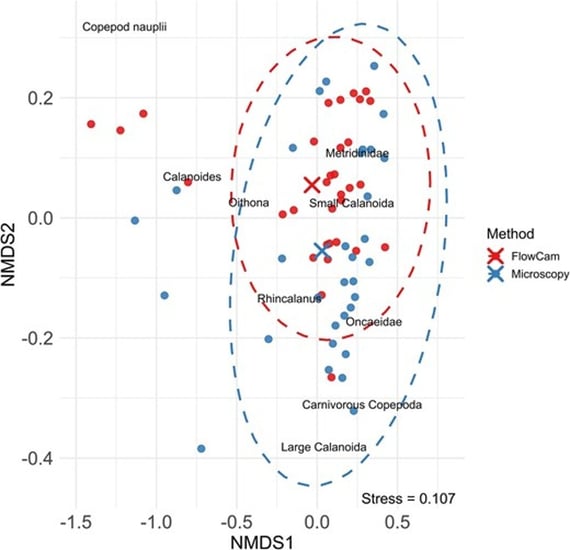
Figure 1. NMDS ordination of copepod relative community compositions based on Bray–Curtis dissimilarities. Each point represents a FlowCam or microscopy classified sample. The overlapping ellipses demonstrate the high degree of agreement between methods (Savineau et al. (2026)).
The data also show how community composition shifts with depth across both sampling stations (Figure 2). Visually, the two methods tell very similar stories about how the copepod community changes from surface waters down to 500 meters.
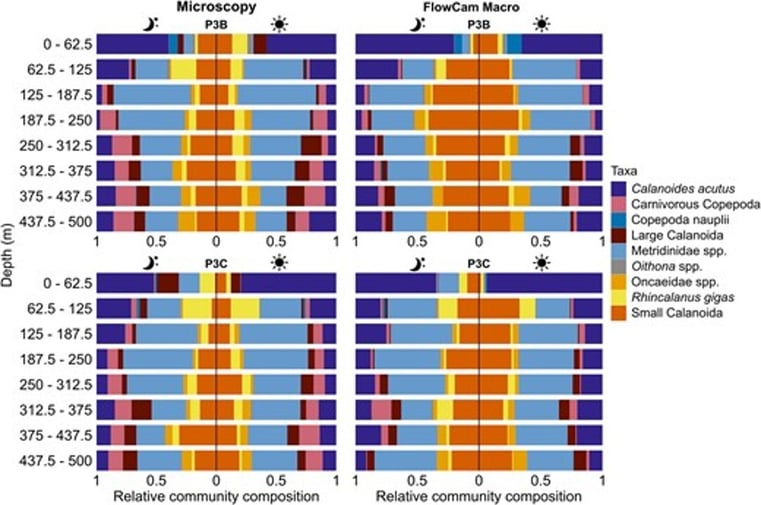
Figure 2. Vertical distribution of copepod community compositions in the Scotia Sea, compared between microscopy (left) and FlowCam Macro (right). (Savineau et al. (2026)).
FlowCam Macro vs. Stereomicroscopy: Processing Time Compared
The study also quantified the difference in processing time between the two methods.
"In terms of time efficiency, microscopy taxonomic and size-based measurement sample processing may take an experienced practitioner 8–16 hours, whereas processing via the FlowCam Macro takes an experienced user 1–2 hours." – Savineau et al. (2026)
That means that FlowCam Macro offers an 8 to 16 times reduction in processing time per sample. For a cruise dataset of 32 net samples like this one, the difference could mean the gap between weeks of laboratory work and a few days.
This speed advantage is not just about convenience, but directly expands what is scientifically achievable: more samples, larger spatial coverage, more temporal replicates, faster turnaround from field to publication.
Beyond Speed: Quantitative Plankton Morphological Data
One of FlowCam Macro's most powerful features is that it not only quickly counts and images organisms but simultaneously captures a rich suite of morphological measurements for every organism imaged.
When particles flow through the instrument, FlowCam Macro automatically generates data on size, shape, transparency, and dozens of other morphological parameters. Savineau et al. highlight that this capability allows researchers to derive ecologically important metrics such as size spectra, from which the user can estimate trophic transfer efficiency across food web levels.
With FlowCam Macro, morphometric data comes standard with every sample run, at no extra cost in time.
How Does FlowCam Macro Work?
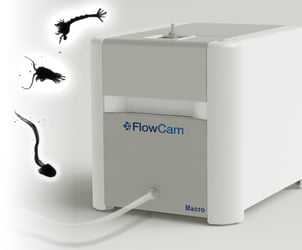
FlowCam Macro is a benchtop flow imaging microscope designed specifically for larger particles covering the 150 µm to 5 mm size range, which encompasses most mesozooplankton including copepods, amphipods, euphausiids, pteropods, and larval fish.
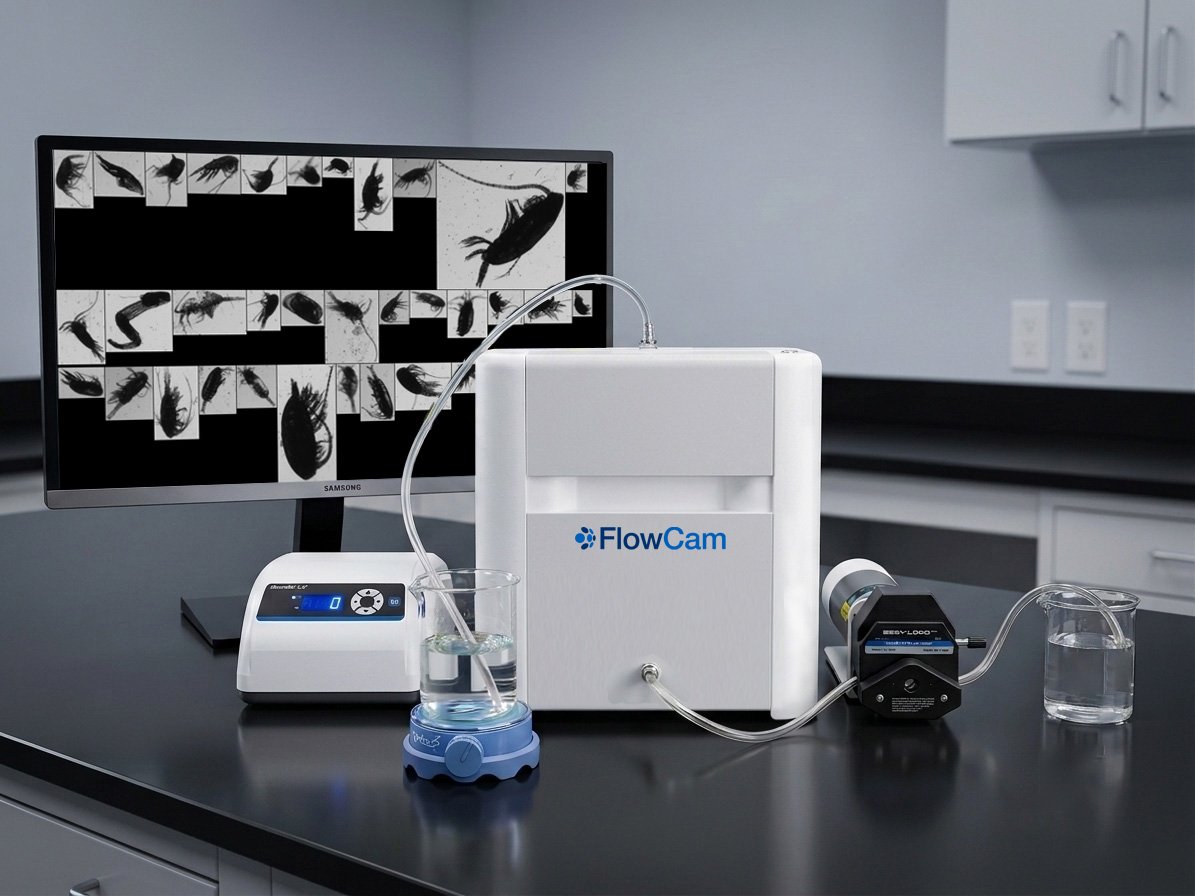
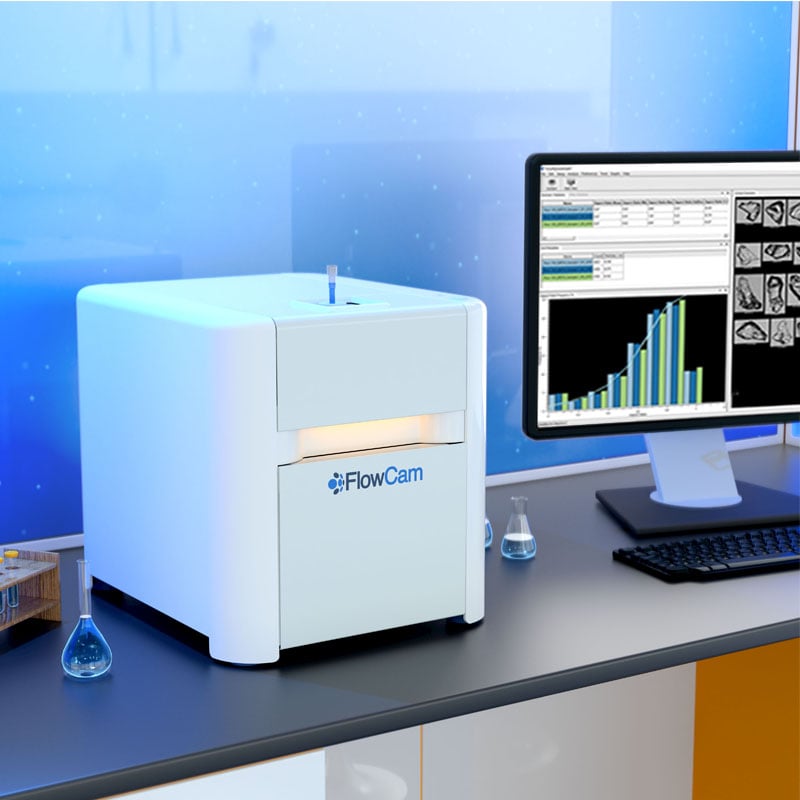
A FlowCam Macro instrument configured for mesozooplankton analysis. The peristaltic pump draws a sample through the flow cell while VisualSpreadsheet software captures and displays individual particle images in real time.
To perform FlowCam Macro analysis, a liquid sample is pumped through a flow cell at a controlled rate, where a high-resolution camera captures individual images of each particle as it passes through. The accompanying VisualSpreadsheet software then measures dozens of morphological parameters per image—size, aspect ratio, transparency, and more—while allowing users to sort and classify images into taxonomic or morphological groups.
Key capabilities include:
- Flow rates up to > 500 mL/min, with recirculating mode to maximize the number of particles captured from a sample.
- Simultaneous size and morphology data: beyond abundance counts, measurement data that can feed directly into ecological modeling.
- Semi-automated classification workflows, reducing the manual effort per sample compared to microscopy alone.
- Streamlined data export to EcoTaxa, the widely used collaborative plankton annotation platform with strong uptake globally across research institutions.
For zooplankton research specifically, FlowCam Macro offers a path to processing the volumes of net samples generated by modern oceanographic surveys in a way that is simply not feasible with manual microscopy alone.
A Note on Zooplankton Taxonomic Resolution
The taxonomic depth achievable with FlowCam Macro depends on the organism; this study was able to identify organisms primarily at the order or family level for most copepods (with exceptions: Calanoides acutus and Rhincalanus gigas were resolved to species). For broad-scale research questions about community structure, depth gradients, or seasonal monitoring, the authors found order- or family-level resolution entirely sufficient.
Where finer detail is needed, FlowCam Macro is well suited as a high-throughput first-pass step: the full sample set can be processed rapidly, with microscopy then applied selectively to the subset of samples requiring genus/species-level identification, sex- or stage-specific data, or discrimination of cryptic species. The two approaches are complementary, and using them in combination makes the most of what each does best.
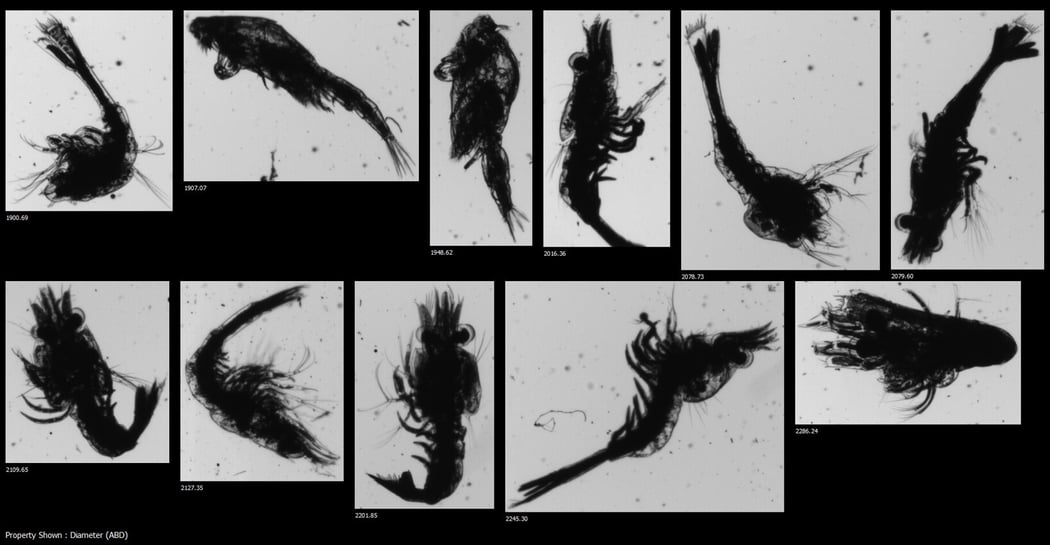
Individual larval shrimp from a mixed assemblage, imaged with FlowCam Macro. Each frame represents a single particle captured as it passes through the flow cell. Images courtesy of Bigelow Laboratory for Ocean Sciences.
Digitizing Ocean Observation at Scale
This study was led by institutions at the heart of marine research—the National Oceanography Centre, the University of Exeter and the British Antarctic Survey—with samples sorted at Poland's National Marine Fisheries Institute. That breadth of collaboration reflects the kind of large, multi-institution datasets that FlowCam Macro is well suited to support.
As the drive to digitize ocean observation accelerates through long-term monitoring networks, large-scale survey programs, and shared annotation platforms like EcoTaxa, the ability to generate standardized, image-based datasets at scale is increasingly valuable. These findings are relevant to any research group processing large volumes of zooplankton net samples, wherever they are based.
Ready to Find Out What FlowCam Macro Can Do for Your Research?
Whether you're processing samples from a major oceanographic cruise, running a long-term coastal monitoring program, or looking to scale up your zooplankton analysis capacity, FlowCam Macro is worth a closer look.
Explore FlowCam Macro
Want to see more FlowCam Macro data for yourself? Explore the FlowCam bibliography for further peer-reviewed publications using FlowCam across plankton research applications.
References
Savineau, E.L-R., Cook, K.B., Belcher, A., Fielding, S., Stowasser, G., Tarling, G.A., and Mayor, D.J. (2026). Comparison of FlowCam Macro and traditional microscopy for studying mesopelagic copepod community composition. Journal of Plankton Research, 48(3), fbag037. https://doi.org/10.1093/plankt/fbag037
Cook, K. B., Belcher, A., Juez, D. B., Stowasser, G., Fielding, S., Saunders, R. A., ... & Mayor, D. J. (2023). Carbon budgets of Scotia Sea mesopelagic zooplankton and micronekton communities during austral spring. Deep Sea Research Part II: Topical Studies in Oceanography, 210, 105296.