




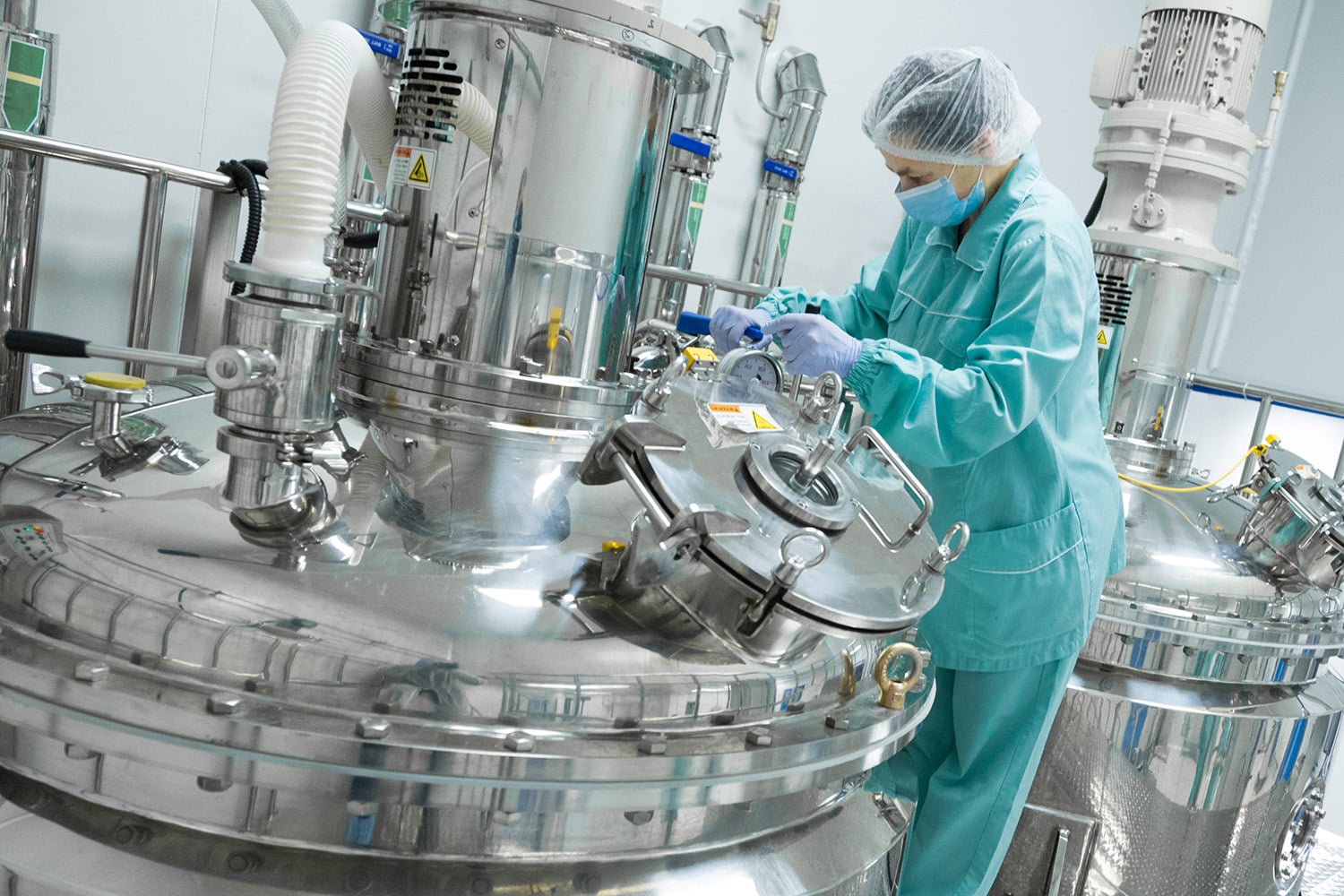
At the 2026 Meeting in the Millyard, the Advance Regenerative Manufacturing Institute (ARMI) convened leaders across regenerative medicine and biomanufacturing to address a shared challenge: building scalable, compliant, and adaptable production systems for advanced biologics, including organoid, cell, and tissue-based therapies. Through discussions and workshops, five key foundational themes emerged as central to advancing next-generation biomanufacturing: closed-loop control, automation, non-destructive monitoring, modularity, and standardization. Together, these themes reflect a shared recognition that future production platforms must integrate real-time process insight, reduce manual variability, preserve sensitive biological materials, and support flexible, interoperable manufacturing systems.
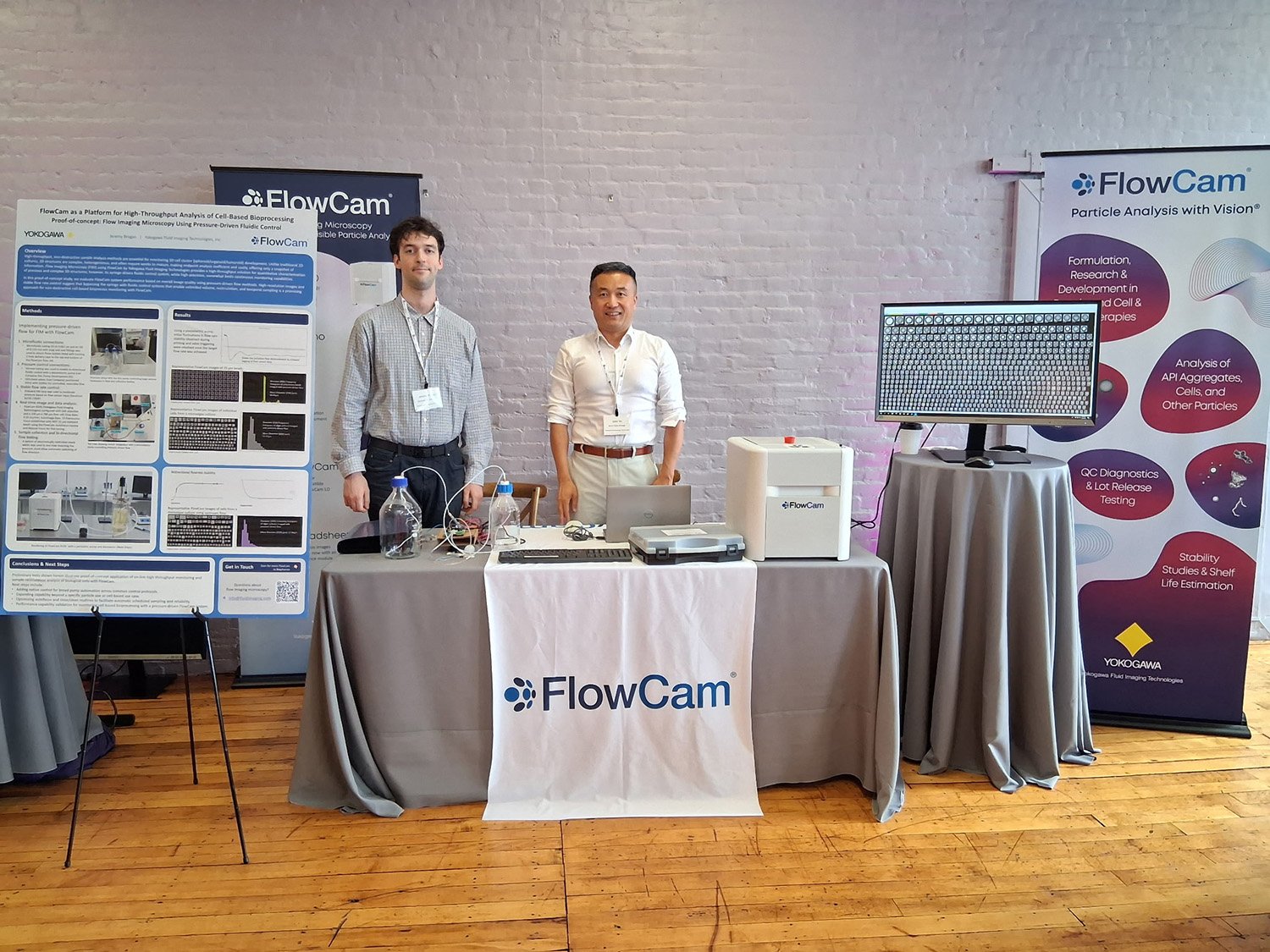
As part of my internship with Yokogawa Fluid Imaging Technologies, I had the opportunity to attend MITM 2026 and demonstrate a proof-of-concept study I developed to assess the potential for FlowCam in cell-based bioprocessing analysis. Piloting an alternative fluidic control system to the native FlowCam syringe pump system, my experiment showed potential for FlowCam use by enabling stable, controllable flow conditions while preserving the advantages of high-resolution flow imaging analysis.
Five Key Foundational Themes in Advanced Regenerative Biomanufacturing
Closed-loop control
Increasing the adoption of closed-loop processing, wherein real-time monitoring and isolation from potential contamination drive process consistency, reduced variability, and enhanced product quality, was emphasized. A closed-loop approach reflects a broader industry shift toward integrating analytics directly into production workflows to support continuous validation in alignment with evolving regulatory expectations.
Automation
Complementing closed-loop strategies, automation was identified as a critical enabler of scale. Automation not only reduces manual intervention and associated variability but also accelerates throughput and reproducibility across unit operations. However, panelists underscored that automation must be implemented in a way that preserves the integrity of sensitive biological materials and supports product validation to meet regulatory requirements.
Non-Destructive Monitoring
In regenerative biomanufacturing environments, non-destructive monitoring techniques are essential to avoid compromising viability or function during analysis. Because cell- and tissue-based products are living, dynamic, and often limited in sample volume, analytical methods must generate meaningful process information without consuming or damaging the material being produced. Non-destructive approaches make it possible to track changes in morphology, concentration, aggregation, and overall product consistency over time, supporting earlier detection of process deviations while preserving samples for downstream use or continued culture.
Modularity
As necessities shift with production demands, flexibility for adjusting workflows to accommodate changes becomes an integral part of manufacturing design. Modularity emerged as another key trend, reflecting the need for flexible manufacturing architectures that can evolve alongside rapid scientific and technological advances. Modular systems allow manufacturers to update or replace individual components without disrupting the entire workflow, reducing downtime and capital risk. Adaptability is closely linked to the push for standardization, which aims to harmonize interfaces, data formats, and process controls across platforms.
Standardization
Standardization facilitates interoperability between instruments, simplifies regulatory validation, and supports broader adoption of integrated manufacturing ecosystems. In the context of regenerative biomanufacturing, standardized interfaces, data structures, and operating parameters are essential for connecting analytical technologies, automation platforms, and process control systems into cohesive workflows. By reducing variability in how instruments communicate, how data are captured, and how methods are transferred between sites, standardization enables more reliable comparison of results across platforms and production environments. This consistency is especially important for advanced therapies, where manufacturing processes must be reproducible, traceable, and adaptable as products move from development to clinical and commercial scale.
FlowCam as a Platform for High-Throughput Analysis of Cell-Based Bioprocessing
MITM 2026 discussions emphasized the growing need for analytical technologies that can deliver high-throughput, non-destructive insight into cell morphology, concentration, and related quality attributes. These conversations also reinforced that instrumentation must evolve to meet new expectations for integration, automation, and real-time process awareness. As an intern with Yokogawa Fluid Imaging Technologies, I was excited to present my initial work exploring how FlowCam and Flow Imaging Microscopy could help address some of the foundational challenges in advanced regenerative biomanufacturing.
In this proof-of-concept study, I evaluated FlowCam system performance using a pressure-driven flow method, demonstrating that pressure-based fluidics can deliver steady, low-shear flow profiles that minimize mechanical stress and maintain consistent transport conditions for fragile biological samples.
Pictured below: Top view showing sensor integration with a piezoelectric pump controlling pressure-driven-flow.
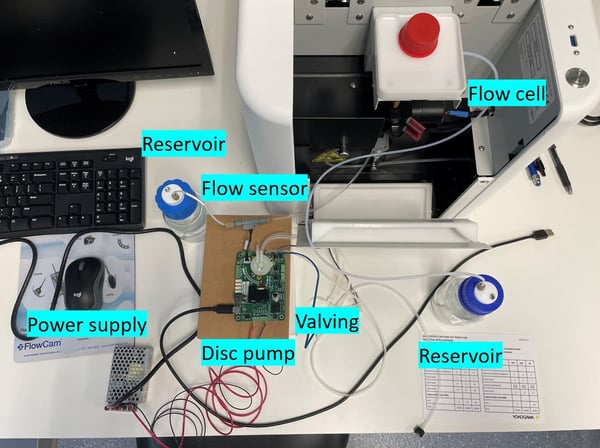
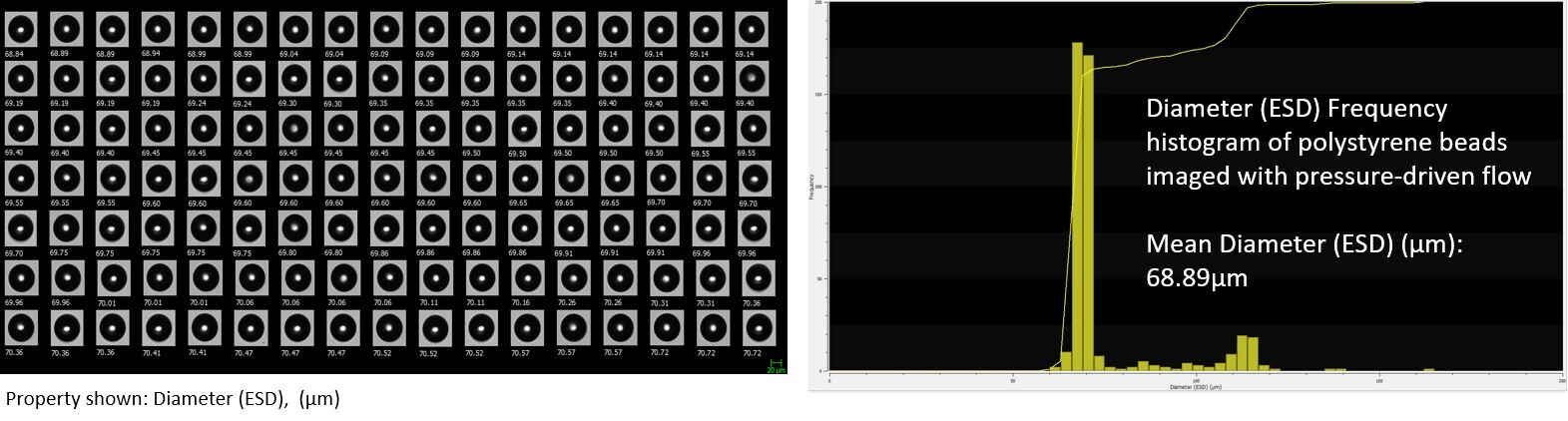
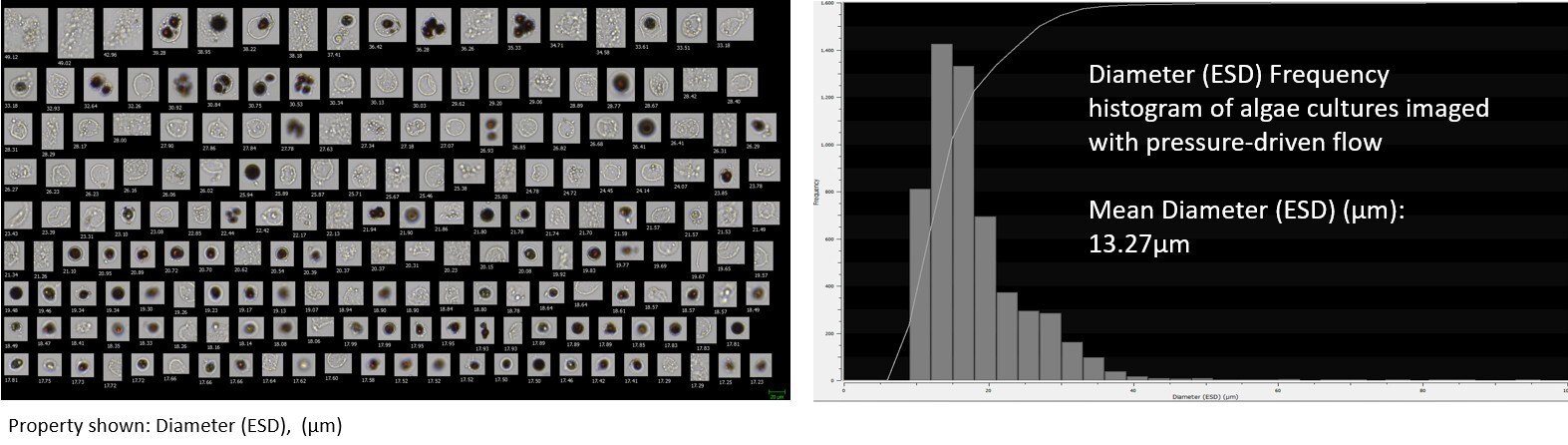
High-resolution images and stable flow rate control suggested that bypassing the native syringe system with a pressure-controlled fluidic system enabled unlimited volume, recirculation, and temporal sampling, representing a promising—though preliminary—proof-of-concept approach for non-destructive cell-based bioprocess monitoring with FlowCam. Next steps will be to assess the capability of preserving sample viability after imaging under pressure-driven flow. Validating the non-destructive profile of FIM with FlowCam will further the possibilities for automating the platform.
Pictured below: Representative image quality and data using polystyrene beads.
Pictured below: Representative image quality and data using a heterogeneous algae culture sample.
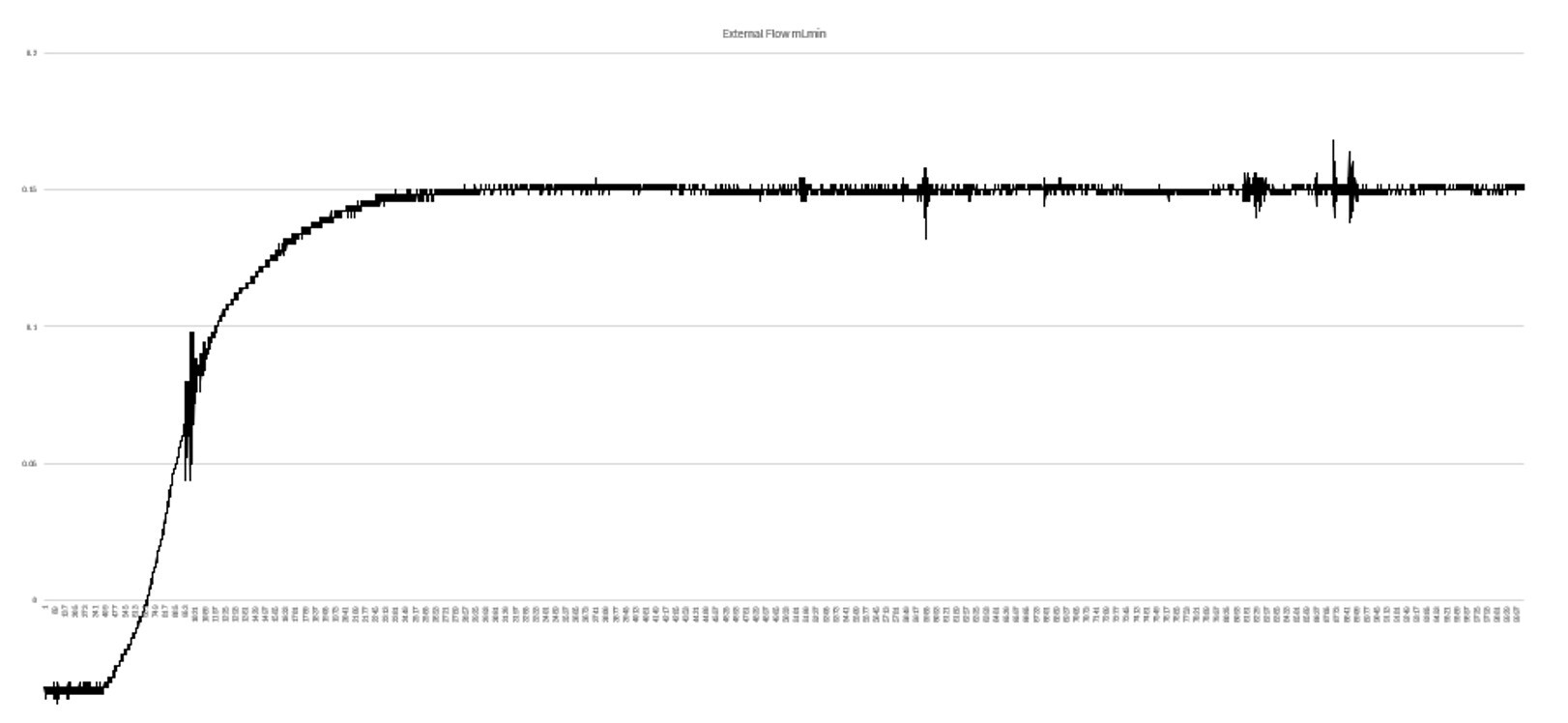
Pictured below: Onboard flow sensor logs demonstrating bidirectional, low-pulsation flow.
Conclusion
To demonstrate early feasibility of using FlowCam for high-throughput analysis of cell-based bioprocessing, a pressure-driven fluidics FlowCam prototype was presented alongside at MITM 2026. By demonstrating non-destructive, stable flow control, with added flexibility for automation and scripting, several aspects of scalable biomanufacturing were discussed. Bridging alternative fluidic controls with FIM expands the applicability of FlowCam to biomanufacturing workflows.
Overall, I observed how MITM 2026 has reinforced that the future of biomanufacturing will be defined by interconnected, adaptive systems built on closed-loop control, automation, modularity, and standardization. By incorporating pressure-driven flow and advancing its integration capabilities, FlowCam can evolve to meet these demands, enabling reliable, non-destructive, and real-time monitoring that supports both scalability and regulatory compliance in next-generation bioproduction environments.