




Notes From Yokogawa’s Biennial User Conference
Our team at Yokogawa Fluid Imaging Technologies came home from this year's YNOW conference in New Orleans inspired by days of exceptional presentations, boundary-crossing conversations, and new connections with people from around the world. We're full of ideas, ready to embrace the challenges ahead, and excited to be standing at the edge of the possibilities emerging in life science.
The conference theme, "In Tune with Tomorrow: Harmonizing People & Progress," was perfectly pitched for the location and its creators’ intent. Kevin McMillen, President and CEO of Yokogawa Corporation of America, opened the event with a challenge to look beyond our own disciplines and industries and imagine collaborating in new ways. "The breakthroughs that will define the next decade of industry will not come from a single company, a single technology, or a single individual: they will come from communities like this one," he told the room. His vision framed the conference around the metaphor of musical orchestration, and reverberated across the three days, during main sessions and throughout every off-stage chord we struck together.
Yokogawa has led industrial automation for over a hundred years, and at YNOW, Life Science took center stage as an increasingly important part of the company’s future. Drug discovery and development can seem far removed from industrial processes and manufacturing, but over the course of the conference, it became clear how little that distance matters. We are all working with intelligent connected systems now, and the challenge is the same in every case: how can we harmonize existing tools and new technologies so they build on each other’s strengths and deliver a much bigger sound?
Pictured above (left to right): Kevin McMillen, Yokogawa Corporation of America President, Fabio Barros of Rio Biofarmaceutica Brasil, the New Orleans YNOW opening orchestra. Photo credit: Yokogawa Corporation of America
Adding New Instruments to Yokogawa’s Life Science Orchestra
The tools available to life science researchers and drug developers are changing not only the speed and scale of experiments, but the resolution at which we can observe living systems. Advanced imaging solutions, organoids, organ-on-a-chip devices, increasingly rich data environments, and computational models allow us to ask questions about cells, biological structures, therapeutics, and their interactions that were difficult or impossible to ask before. As the tools and technologies change, our working understanding of life and how to engage with biological systems evolves with them. Each new dimension that we can observe changes what we understand and what we can create from it.
In his keynote address, Dr. Jonny Sexton of the University of Michigan plainly outlined how legacy approaches to drug discovery and development are falling out of tune with today’s demands. Roughly nine out of ten drug candidates that reach clinical trials never become approved medicines1, and a major reason for that is the inability of traditional laboratory models to replicate the complexity of human biology. Advanced organoids and organ-on-a-chip systems are changing that.
And the promise is substantial. Rather than relying only on simplified experimental systems and poorly predictive animal models, researchers can now work with models that better reproduce human biology, improving formulations and targeting while minimizing toxicity. But the closer a model gets to living human biology, the more complexity it entails. Variability, reproducibility, image acquisition, analysis, handling, and scale all become part of the scientific problem. Dr. Sexton underscored how advanced tissue models cannot perform as an isolated solo; they require an equally sophisticated rhythm section behind them. He argued that the next major breakthroughs hinge on better process controls, incorporating imaging, sensing, robotics, and AI. His take was that Yokogawa's advanced imaging solutions can function as the conductor in the workflow, keeping time and bringing notes of complex phenotypic responses into full, high-definition harmony at scale.
Video: An excerpt of the YNOW 2026 talk given by Dr. Jonny Sexton, University of Michigan
Dr. Sophia Meyer, Principal Scientist at Intero Biosystems, showed what such an ensemble looks like in practice.
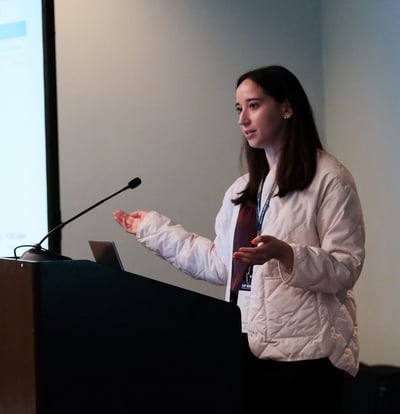 Meyer’s team built human intestinal organoids that natively develop an internal immune compartment during tissue formation, making it possible to study how immune and epithelial cells interact. Those experimental conditions are difficult to achieve. Immune cells are short-lived and easily activated, so keeping them alive and quiet inside an organoid takes many rounds of trial and error, and knowing which attempts are working is its own problem. Her team used Yokogawa high-content imaging solutions to define exactly what an inflamed organoid looks like, then measured each attempt against that standard until the model was stable. The platform responded to inflammatory bowel disease drugs the way those drugs are known to behave, and Dr. Meyer went on to show how the same approach could be built to address individual patients with precision medicine. That's where the data problem becomes real: the question is no longer how much data we can generate, but how we can integrate, interpret, and act on it. Intero’s platform generates massive, multi-parametric datasets that map complex human biology in detail to drive precision medicine. However, translating this overwhelming volume of raw data into actionable insights creates a severe bottleneck, as standard analytics systems struggle to scale up and process such highly complex biological profiles efficiently. Recognizing the immense data friction signaled a massive call for innovation across the industry—and we heard it loud and clear!
Pictured above: Dr. Sophia Meyer speaking at YNOW 2026. Photo copyright: Yokogawa Corporation of America
The company’s platform technology centers on creating advanced, multi-lineage human intestinal organoids (HIOs) derived from induced pluripotent stem cells (iPSCs). Spun out of Dr. Jason Spence's lab at the University of Michigan, their core innovation closes the gap in preclinical drug discovery by providing a highly predictive, "miniature gut in a dish" to replace or reduce animal testing.
Drug Design: From Discovery to Composition
Dr. Fabio Barros, Chief Science Officer at Rio Biofarmaceutica Brasil (RBBL), gave the talk that resonated with us the longest. As the leader of a pharmaceutical company that manufactures complex injectable biologics, Barros demystified the complexity of formulation discovery. He asked us to think about amino acids the way you think about Lego bricks. One by one, amino acids can connect in various ways to form an assembly of peptides. And as the peptide assemblies are generated, if you can test them and learn from the ones that work, you are no longer searching for a drug. You are designing one. That is the shift he described: “from drug discovery to drug design”. Having Dr. Barros as a keynote speaker was a highlight of the YNOW conference for our team, as he and his team use FlowCam extensively to assess product quality.
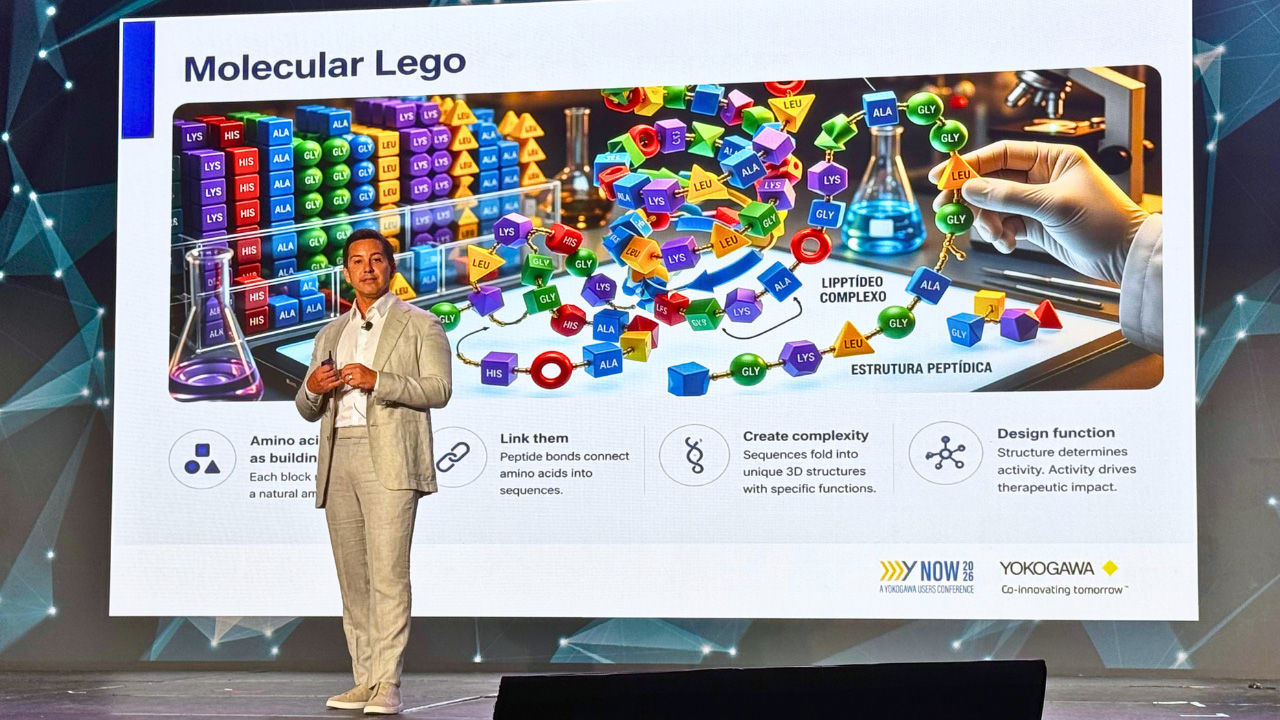
Pictured above: Dr. Fabio Barros speaking at YNOW 2026
Peptides are unusually configurable, highly programmable molecular building blocks. The modular architecture of peptides provides an expansive design space, where minor sequence modifications dictate biological activity, delivery, and stability. Managing the multi-dimensional data generated by these variations, however, presents a significant challenge. Critical insights regarding sequence, formulation, processing, and biological outcomes are frequently lost or siloed in unread files. To address this, Fabio’s team developed a unified data lake. Rather than serving as passive storage, this platform aggregates historical experimental outcomes to make the data fully actionable, enabling researchers to sequentially narrow the target search space rather than restarting the optimization process.
This is where AI matters. Not as a source of predictions, but as a way to work through a design space too large to search by hand. Given enough well-structured experimental data, computational methods can find relationships across thousands of variables and tell you which experiment to run next. Design, measure, learn, refine.
Where FlowCam Enters the Score
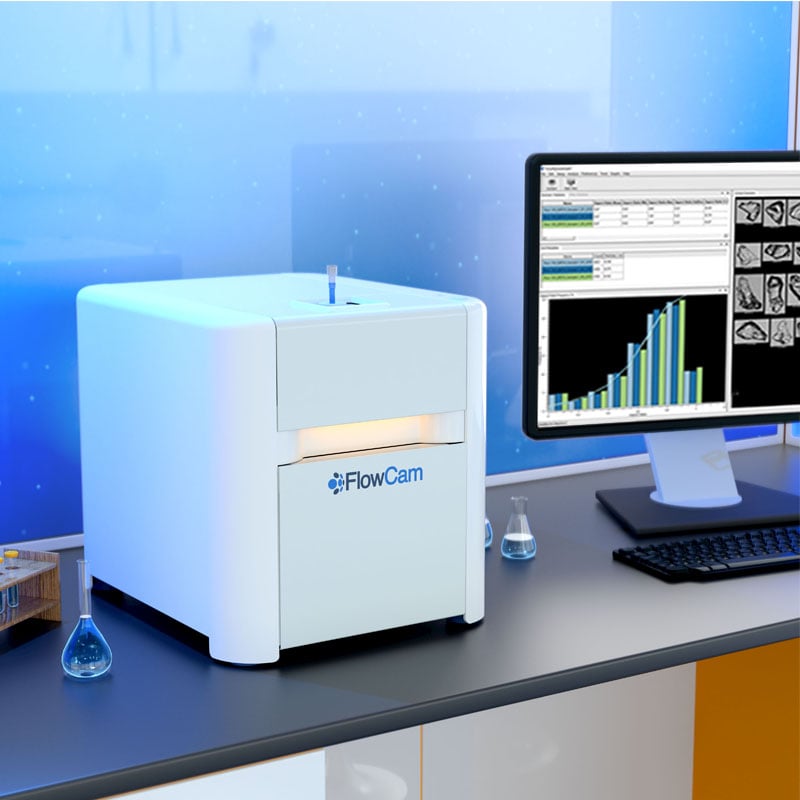
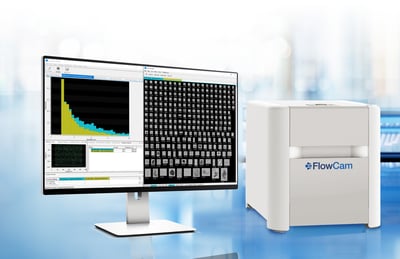 Flow imaging microscopy adds a powerful dimension to drug development workflows. FlowCam captures, images, and measures the size and morphology of individual particles in a fluid sample, enabling particle identification and providing a rich dataset of particle characteristics rather than just particle size and count. That difference matters when the particle population is not uniform, which in biologics it rarely is.
In biopharmaceutical development, population-level particle data is useful well before final formulation. Particle imaging supports characterization during development, comparison across formulations or process conditions, investigation of aggregation, root-cause analysis, and assessment of stability and product quality.
In the context of Dr. Barros’ data lake, FlowCam’s data output is not an endpoint. It becomes just one layer among many. Molecular information, biological responses, formulation conditions, particle morphology, process history, and performance are all individual melodies describing the same material from different angles. The true genius—and ultimate value—is in harmonizing them to strike a much bigger chord.
Finding Harmonies Between Industries
One of Dr. Barros' points was especially appropriate for a Yokogawa conference. Life science, he said, can learn from industries like oil and gas. Not because the science is the same, but because complex industrial operations have spent decades learning how to connect measurements, process data, automated systems, and control steps across continuous systems. Life science is now addressing that same challenge. Dr. Sexton came at it from the other side. At the end of his keynote, he turned the argument into a request, asking the Yokogawa audience in the room to help make the connection between biological measurement and industrial automation real.
This is where Yokogawa's history takes center stage in the emerging life science landscape. For generations, the company has operated as the conductor at the intersection of measurement, instrumentation, automation, and process control. Life science admittedly brings a different rhythm: living systems are dynamic, heterogeneous, and variable in ways a refinery is not. Yet the underlying arrangement remains the same—connecting complex isolated measurements into stable, robust workflows is a classic performance that Yokogawa has been perfecting since its very first verse.
The opportunity is not to impose an industrial model on biology. It is to take what transfers from automation, robotics, analytical instrumentation, data architecture, and AI, and leave the judgment and interpretation of living systems to the scientists.
Who Holds the Baton
Which brings us back to New Orleans. Some of the best moments of the conference happened outside the sessions at the music-filled after-hours party and riverboat cruise. Researchers compared approaches, customers talked with the people who build their instruments, and conversations that started in presentations carried on throughout the evening.
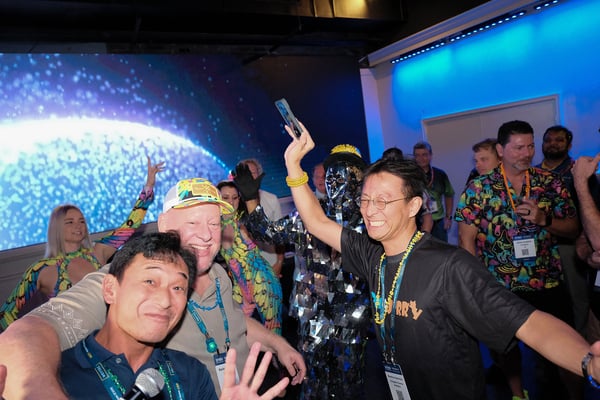 The fun mattered! Intellectual and creative stimulation isn't separate from serious scientific collaboration—it's often the condition that makes it possible. When people are curious enough to cross disciplinary boundaries, unexpected connections emerge.
If there was one idea we carried away from the conference, it was not that a single technology is about to transform drug discovery. It was almost the opposite. As we gain more precise ways to observe cells, build human-relevant models, characterize therapeutics, automate experiments, connect data, and apply AI, progress depends increasingly on how well those capabilities work together. The next advancement may come not from making one instrument play louder, but from learning to hear the whole orchestra, with humans leading the way when it comes to what we are trying to understand, what we should design, and why.
Let's meet in person to discuss the future of your biotherapeutic workflow! See where the FlowCam team will be next:
References
Sun D, Gao W, Hu H, Zhou S. Why 90% of clinical drug development fails and how to improve it? Acta Pharm Sin B. 2022;12(7):3049-3062. doi:10.1016/j.apsb.2022.02.002.